


“You don’t lose games because of mistakes. You lose them because you never let the last one go.”
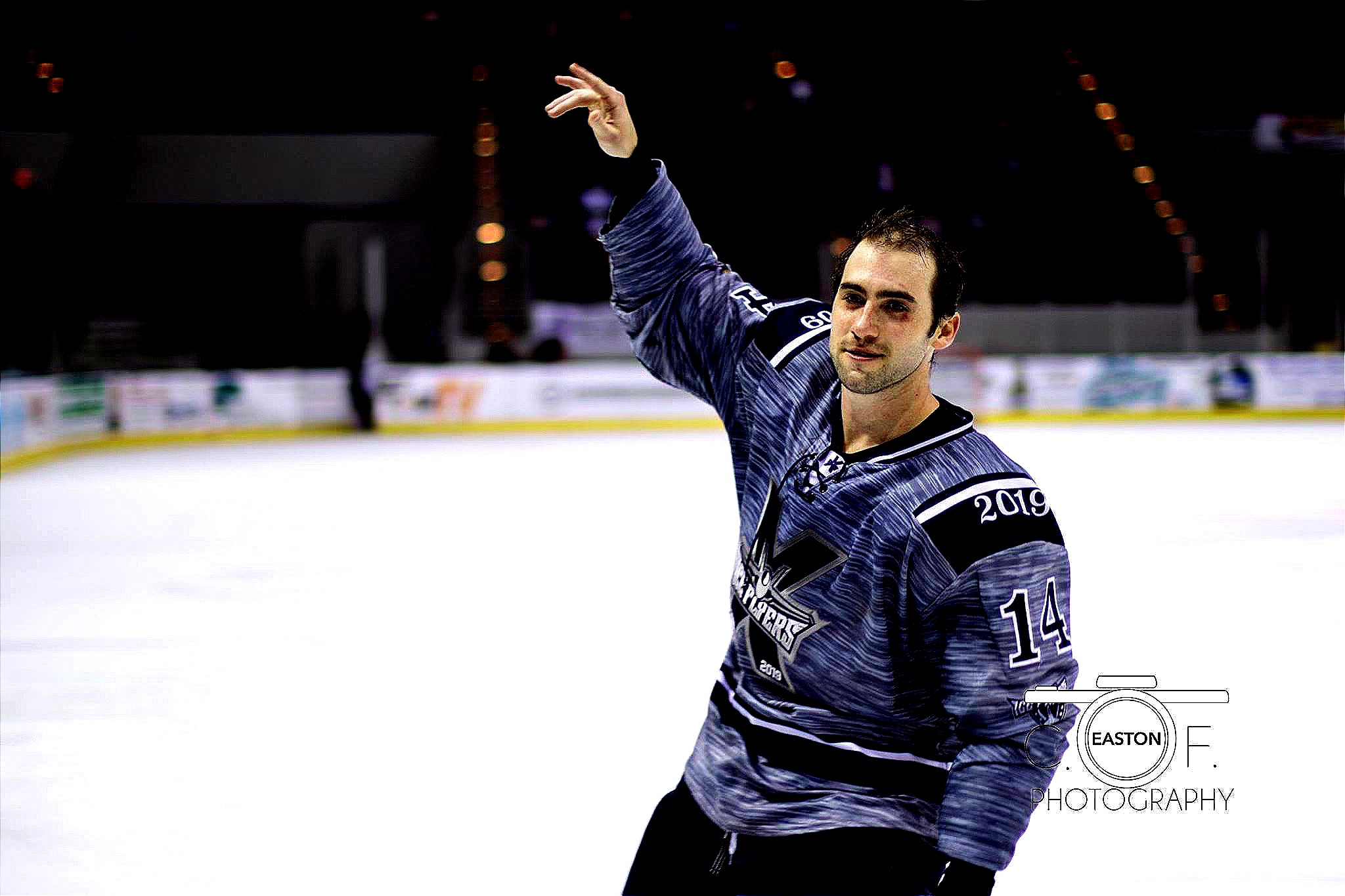
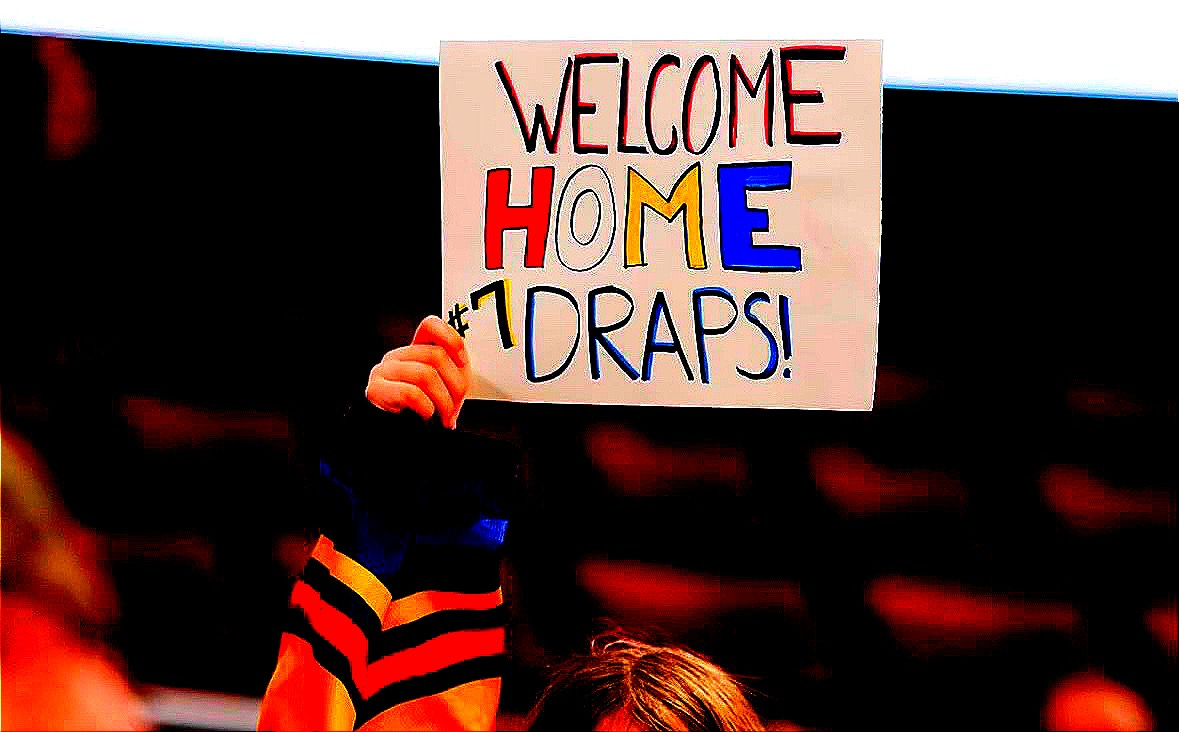
What’s up y’all! Draps here.
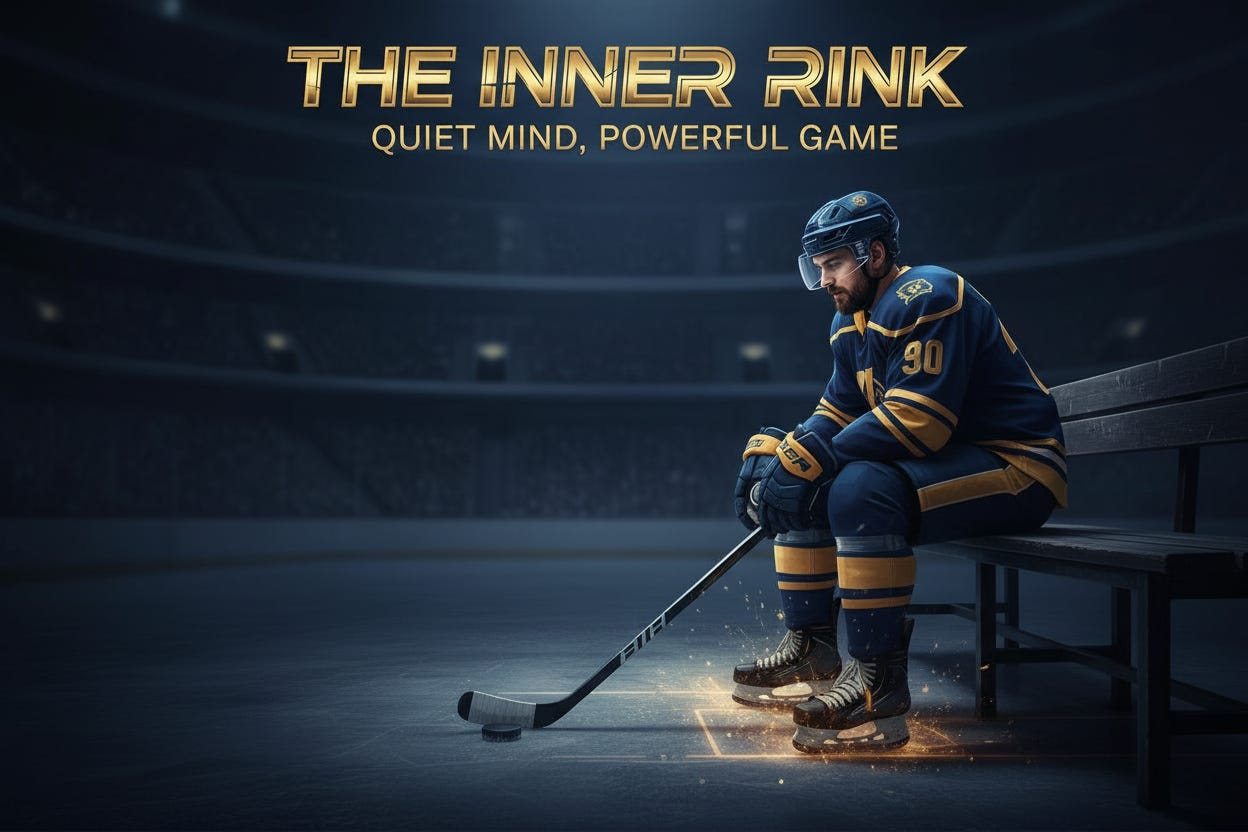
I co-create The Inner Rink—a weekly practice on the psychology of performance, discipline, and greatness, on and off the ice.
I’m a pro hockey player turned writer and mentor—here to be the guy I wish I had when I was chasing the dream.
RESET is one of the first Inner Rink skills I ever learned—even before I had a name for it.
And just like any other skill, it needs to be sharpened through practice and repetition. Let’s RESET.
What This RESET Practice Is
RESET isn’t motivation.
It’s not mindset hype.
It’s not about playing better hockey.
RESET is a practice.
A skill you return to in the moments between shifts:
after the play.
after the whistle.
after something doesn’t go your way.
This is the Inner Rink.
Why RESET Matters
Most players think the damage happens on the ice; it doesn’t.
The damage happens after the play when the mind starts replaying, judging, spiraling, and quietly rewriting identity in real time.
That’s where confidence cracks.
That’s where doubt creeps in.
That’s where players disappear inside the moment.
RESET interrupts that process.
Not by calming down and not by forcing confidence, but by staying yourself when the moment tries to decide who you are.
This isn’t something you understand once. It’s something you return to—between shifts.
What RESET Looks Like In Real Life
A defining example when I used the Inner Rink RESET skill in my pro career came during the semifinals of the season we won the championship in Peoria.
Five minutes left.
Tight game.
The other team scores to go up 2–1.
And you could feel it immediately.
The entire arena reacted.
Their bench exploded like they had just won the game.
Our bench went quiet.
You know that feeling, when the air shifts and doubt settles in.
The story starts writing itself:
“This might’ve been the dagger.”
“We’re running out of time.”
“This could be it.”
Most teams live or die right there.
This was my moment between shifts.
I was on the bench, breathing, slowing everything down.
Not buying the initial reaction.
Not replaying the goal.
Not letting the noise decide anything.
I RESET.
The story changed.
From:
“Fuck… we’re going to lose.”
To:
“This is my mo ment.”
“Just win the next shift.”
“We don’t lose at home.”
Nothing dramatic and nothing loud.
Just a decision about who I was going to be.
Next shift, I scored. It was my only goal of the entire playoffs.
And everything flipped.
The arena shifted.
Our bench came alive.
Their bench went silent.
In less than 40 seconds, the story went from:
“We’re about to lose”
To:
“We’re winning this game.”
Same rink. Same clock. Same teams.
Different Inner Rink.
That’s RESET.
RESET > REACT
Most players do one of two things after a moment goes wrong:
They react emotionally.
Or they carry the last shift into the next one.
Both lead to the same place.
You stop playing from who you are.
And start playing from what just happened.
RESET gives you another option.
The RESET Practice
RESET happens in three internal movements:
Release
Let the moment go without explanation or blame.Return
Come back to your breath. Your body. The present moment.Reclaim
Reconnect with who you are and not what just happened.
RESET isn’t about calming down. It’s about making sure the moment doesn’t rewrite your identity.
This is something you train just like a skill.
What RESET Changes
With consistent RESET practice:
Mistakes lose their grip.
Pressure loses control.
Confidence stabilizes.
Identity becomes internal.
You stop needing approval.
You stop fearing reaction.
You stop spiraling after moments you can’t change.
RESET creates space.
RHYTHM is how you move inside that space.
Beyond The Rink
RESET isn’t just a hockey skill. It’s a life skill.
You use it after:
a hard conversation.
a bad decision.
a loss.
a setback.
a moment you wish went differently.
Life has shifts too.
RESET is how you move through them without losing yourself.
Jessica’s Perspective: Nervous System & Identity
When an athlete doesn’t reset, the nervous system stays locked in reaction.
The body interprets the mistake as threat—not danger, but instability.
Heart rate stays elevated.
Attention narrows.
Thoughts loop.
This isn’t weakness; it’s biology.
RESET signals safety. When you release the moment instead of replaying it, the nervous system downshifts out of survival.
That’s when clarity returns.
That’s when decision-making sharpens.
That’s when identity stabilizes.
True mental strength isn’t emotional numbness. It’s inner regulation.
When identity becomes internal, the nervous system settles—and performance follows.
RESET isn’t psychological. It’s physiological.
Reader Reflection
Think about a recent moment, on the ice or in life, where something didn’t go your way.
What did you do after it happened?
Did you replay it?
Carry it?
Let it define the next moment.
Now ask yourself:
“What would have changed if you had reset before the next shift began?”
That’s the inner work.
Final Thoughts
Most players think the game is decided by skill, speed, systems, or opportunity.
However, when you strip away the noise, it always comes down to one thing:
The Inner Rink.
Your real identity, the one that decides your ceiling, shows up when things fall apart.
If you can release the moment instead of replaying it.
Return to yourself instead of reacting emotionally.
And reclaim who you are before the next shift begins,
The moment never gets to decide anything for you.
You do.
Thank you for reading this article. I appreciate you.
—Joe Drapluk
The guy I wish I had when I was chasing the dream.
Up Next:
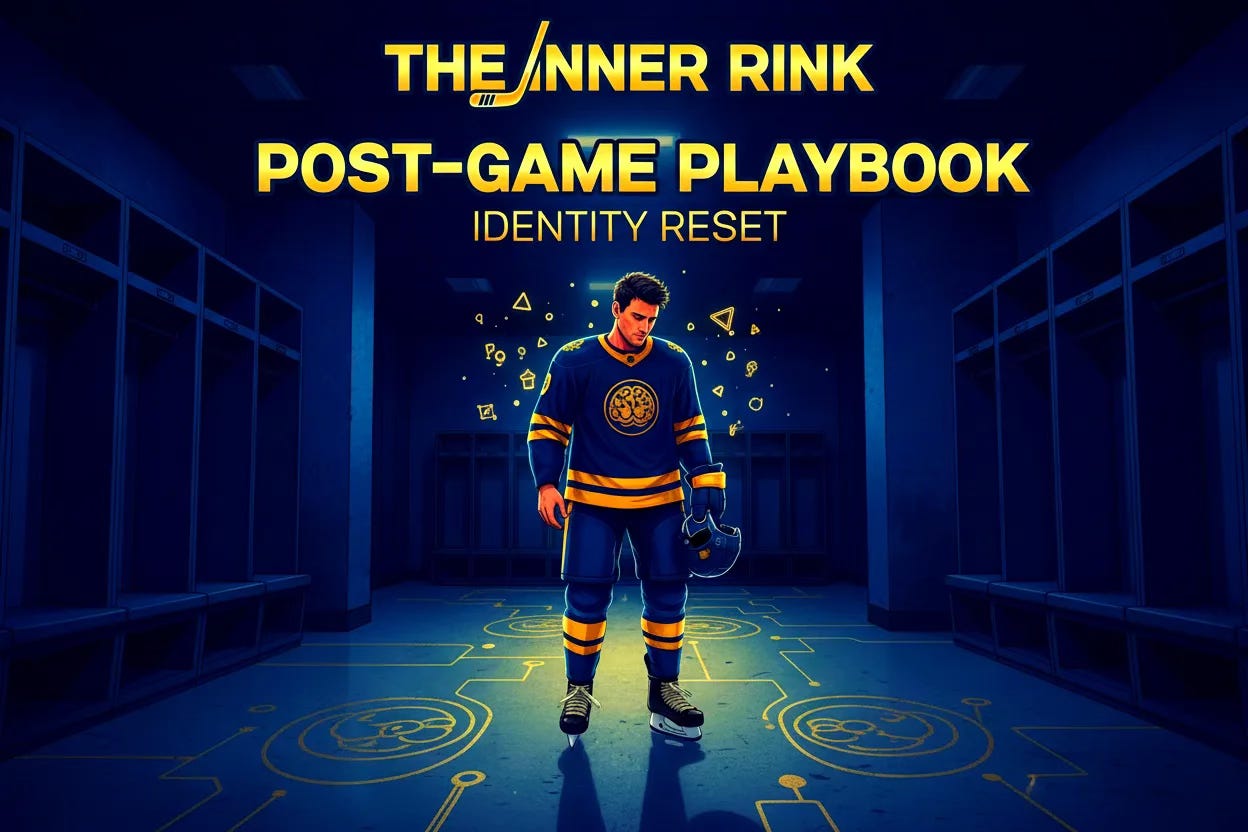
The Post-Game Playbook—A practice for navigating identity when the structure disappears.
DISCLAIMER
The Inner Rink shares educational content for athletes and readers interested in performance psychology, mindset, and discipline. It is not intended as medical, psychological, or therapeutic advice or to take the place of such advice or treatment from a personal physician. Always seek guidance from a qualified health care professional regarding your specific questions and individual situation.
I gotta work on RESET along with my pauses!! Rule number one: wait at least 10 seconds after the stimulus or stimuli before responding !!
See guys keep pushing everyday