


“You don’t have to be the best player in the room to change the room.”

What’s up y’all! Draps here.
I co-create The Inner Rink-a weekly practice about the psychology of performance, discipline, and greatness on and off the ice.
I’m a pro hockey player turned writer and mentor here to be the guy I wish I had when I was chasing the dream.
The Inner Rink isn’t just about performance.
It’s about who you become inside the room.
Inside every team, every locker room, and every group under pressure, certain roles always emerge.
Some players chase attention.
Some players chase stats.
And some players stabilize everything.
Every coach has a phrase for that player:
“Every team needs a guy like that.”
That player has a name in the Inner Rink.
The Total Teammate.
This is where today’s practice begins.

What the Total Teammate is
The Total Teammate isn’t the loudest player.
Not the flashiest.
Not always the captain.
The Total Teammate is the player who stabilizes the room.
They regulate before reacting.
They bring consistency when others fluctuate.
They hold the standard quietly.
Not for recognition. For the team.
Anyone can become this player.
It’s not a title. It’s a discipline.
What “Total” Actually Means
At its core, The Total Teammate isn’t a role.
It’s an identity.
It describes someone who shows up completely for the team in every environment the game creates.
🥅On The Ice
The Total Teammate:
Does their job and the invisible jobs.
Competes every shift regardless of minutes or role.
Elevates linemates; not just their own stat line.
Is trusted in hard moments.'
Late-game shifts.
Down a goal.
Protecting a lead.
They play the game the right way, even when nobody is watching.
🥅In The Locker Room
The Total Teammate:
Brings emotional stability (never too high, never too low).
Holds the standard without preaching.
Makes teammates feel sharper and more confident.
Knows when to lead, when to listen, and when to disappear.
Energy spreads. The Total Teammate understands that and manages their energy accordingly.
🥅With Coaches & Staff
The Total Teammate is:
Coachable.
Dependable.
Low ego.
High accountability.
They execute the system even when the puck isn’t finding them.
And over time something happens: Reliability becomes trust.
🥅At The Organizational Level
Eventually the Total Teammate stops being viewed as just another player.
They become:
An asset, not a variable.
Someone who fits any room, any role.
Someone who raises culture; not just competes inside it.
That’s why the word Total matters.
Not the best scorer. Not the toughest guy.
Complete. Reliable. Trusted.

What Most Players Miss
Most athletes believe value comes from production.
Goals.
Assists.
Stats.
Minutes.
But inside a locker room, value often looks different.
The players who last the longest and matter the most usually do something else:
They make everyone around them better.
Not by talking constantly.
By how they carry themselves.
Their preparation.
Their regulation.
Their reliability.
They stabilize the environment and coaches notice that faster than any stat line.
Why Coaches Trust This Player
Every coach is searching for one thing: reliability.
When games get chaotic, they want to know someone will still play the game the right way.
The Total Teammate becomes that player.
They backcheck when they’re tired.
They support teammates when confidence dips.
They execute the system even when the puck isn’t finding them.
Not because it’s glamorous, because it’s necessary.
Over time, that reliability becomes trust. And trust becomes opportunity.

The Inner Rink Role
The Total Teammate shows up in moments like:
After a bad shift.
After a goal against.
During a losing streak.
During travel.
During adversity.
When emotions spike, the Total Teammate regulates.
They don’t add chaos to the room; they contain it.
They simplify the moment.
This is quiet leadership and teams win long seasons because of it.

Jessica’s Perspective- Group Regulation
Teams regulate off the calmest nervous system in the room.
Not the loudest. Not the most talented.
The most regulated.
When one player stays grounded, the group subconsciously stabilizes.
When one player spirals, it spreads.
Emotional contagion is real. So is emotional containment.
The Total Teammate contains.

The Practice
Becoming a Total Teammate is behavioral discipline.
Start with four habits.
Regulate Before You React
Bad shift.
Bad call.
Bad bounce.
Pause.
Slow breath.
Respond; don’t react.
Do The Small Things Consistently
Details build trust.
Backchecks.
Line changes.
Preparation.
Consistency stabilizes rooms.
Speak Less, Mean More
The Total Teammate doesn’t talk constantly.
However, when they speak, it matters.
Quiet credibility is stronger than loud leadership.
Make The Room Better
Energy spreads. So does calm.
Bring stability, not noise.
The Daily Behavior Standard
🥅Before The Rink
Ask yourself one question:
“How can I make the group better today?”
Then visualize one teammate you can uplift.
Energy.
Communication.
Confidence.
Total Teammates don’t need perfect conditions to lead.
🥅At The Rink
Be early.
Make eye contact.
Acknowledge staff.
Your body language should say: “I’m here to work. I’ve got you.”
The room should feel better when you walk in.
🥅During Practice
The first three reps matter.
Make them sharp.
Intentional.
Fast.
Communicate early. Finish drills the right way.
Coaches trust players they don’t have to watch closely.
🥅Between Whistles
Eyes on the game.
Communicate useful information.
Reset immediately after mistakes.
The bench is a mirror.
Be the reflection you want the team to see.
🥅After the Game
Recovery begins immediately.
Nutrition.
Mobility.
Treatment.
Thank the staff.
Then reflect: What did I do well for the team today? What do I adjust tomorrow?
🥅Off The Ice
Sleep like a pro.
Eat like your career depends on it.
Train for durability. Not Instagram.
Availability is value.
🥅The Hard Day Standard
Bad days happen.
The Total Teammate responds the same way every time.
Show up anyway.
Simplify the game.
Effort before emotion.
This is where separation happens.
🥅The Litmus Test
Each night ask yourself three questions.
Did I make at least one teammate better today?
Would a coach feel more comfortable trusting me tomorrow?
Did I behave like someone a championship team keeps around?
If yes= stay the course. If no= tomorrow is a correction.
🧠 Reader Reflection
Think about the best teams you’ve been part of.
Who stabilized the room?
Who stayed steady when things went wrong?
Now ask yourself: What would it look like if that player was you?
Beyond The Rink
The Total Teammate role applies everywhere.
Work teams.
Families.
Friend groups.
Every environment under pressure needs someone who can stabilize it.
Not dominate it. Contain it.
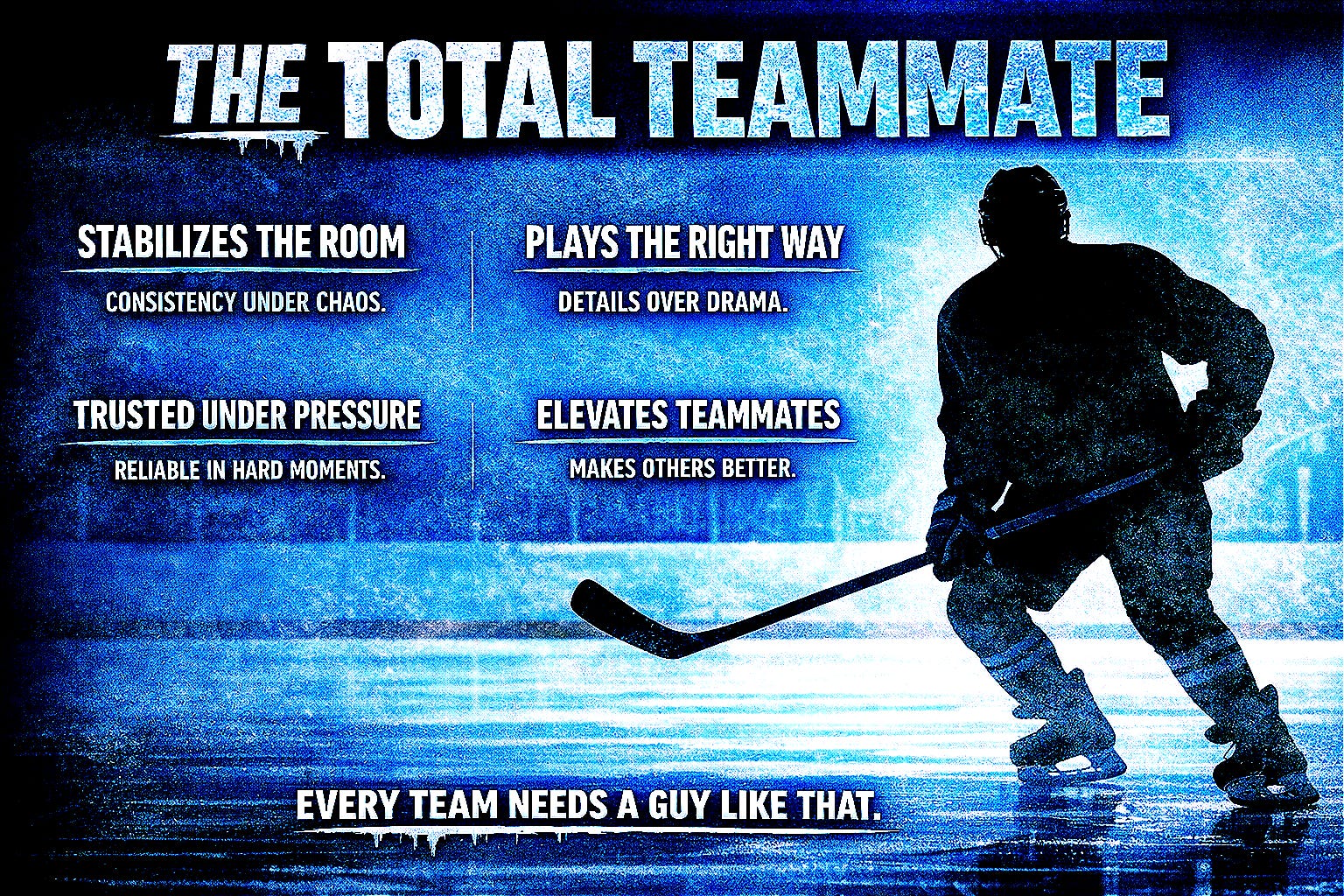
The Total Teammate Code
The Total Teammate follows a simple code:
• Do your job and the invisible jobs
• Compete every shift regardless of role or minutes
• Make linemates better, not just your stat line
• Stabilize the room when emotions spike
• Execute the system even when nobody is watching
• Speak with purpose, not volume
• Bring consistency when others fluctuate
• Leave every environment better than you found it
The goal is simple:
Become the player every team trusts.
Not the loudest.
Not the flashiest.
The most reliable.
Final Thoughts
You don’t have to be the best player in the room to change the room.
You just have to stay steady when others don’t.
That role is always available.
Anyone can step into it.
That’s The Total Teammate.
Talent gets noticed. Total Teammates get kept.
Thank yourself for showing up to practice today. I’ll see you next time.
—Joe Drapluk
The guy I wish I had when I was chasing the dream.
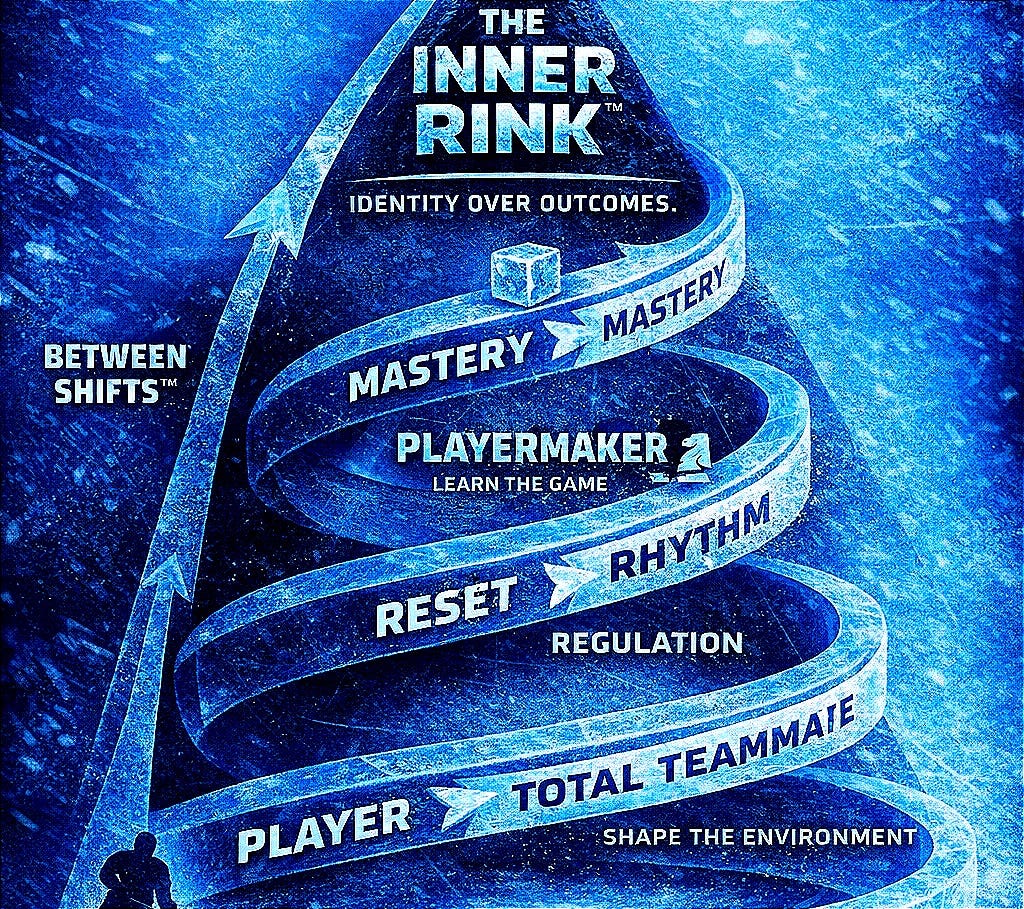
Where This Fits In The System
RESET → stabilize yourself
RHYTHM → stabilize your tempo
TOTAL TEAMMATE → stabilize the room
FLOW → perform freely
MASTERY → identity independence
PLAYERMAKER → shape the environment
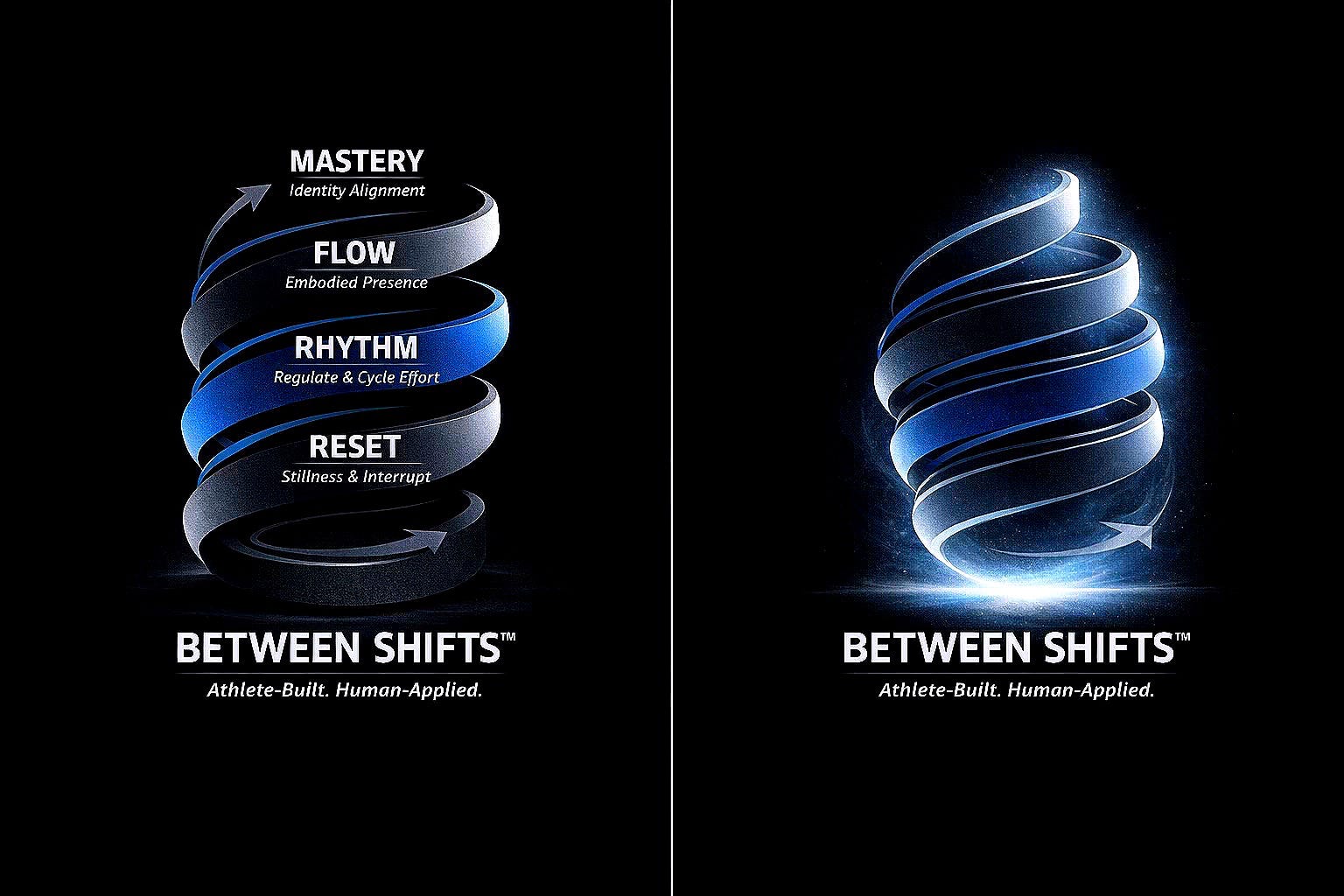
🏆Up Next in The Inner Rink:
Between Shifts: FLOW
A practice for executing without force. Flow isn’t something you chase.
It’s what remains when nothing inside you is fighting the moment.
DISCLAIMER
The Inner Rink shares educational content for athletes and readers interested in performance psychology, mindset, and discipline. It is not intended as medical, psychological, or therapeutic advice or to take the place of such advice or treatment from a personal physician. Always seek guidance from a qualified health care professional regarding your specific questions and individual situation.
Great work, Captain Joe!
Great piece. This shows up in business too. Not always the top performer or loudest voice. It’s the person who stays steady when things get messy and quietly makes the whole team better. Those people end up being the ones leadership trusts the most.