


“A PlayerMaker doesn’t just make plays. A PlayerMaker makes people better.”
What’s up y’all! Draps here.
I co-create The Inner Rink — a practice about the psychology of performance, discipline, and greatness on and off the ice.
I’m a pro hockey player, writer, and mentor — here to be the guy I wish I had when I was chasing the dream.
All season, we’ve been working inward. Learning how to interrupt the noise.
How to regulate when everything speeds up.
How to trust ourselves enough to stop forcing performance.
How to become so aligned with who we are that confidence no longer has to be earned every shift.
RESET.
RHYTHM.
FLOW.
MASTERY.
Then we took that work outside of ourselves. We became The Total Teammate.
The player who doesn’t add chaos to the room.
The player who can be trusted.
The player who makes the team more stable simply because they’re part of it.
But there’s one more evolution.
The work you’ve done on yourself has to become bigger than you. Everything you’ve learned has to become something you can give away.
That player has a name inside The Inner Rink.
The PlayerMaker.
This is where today’s practice begins.
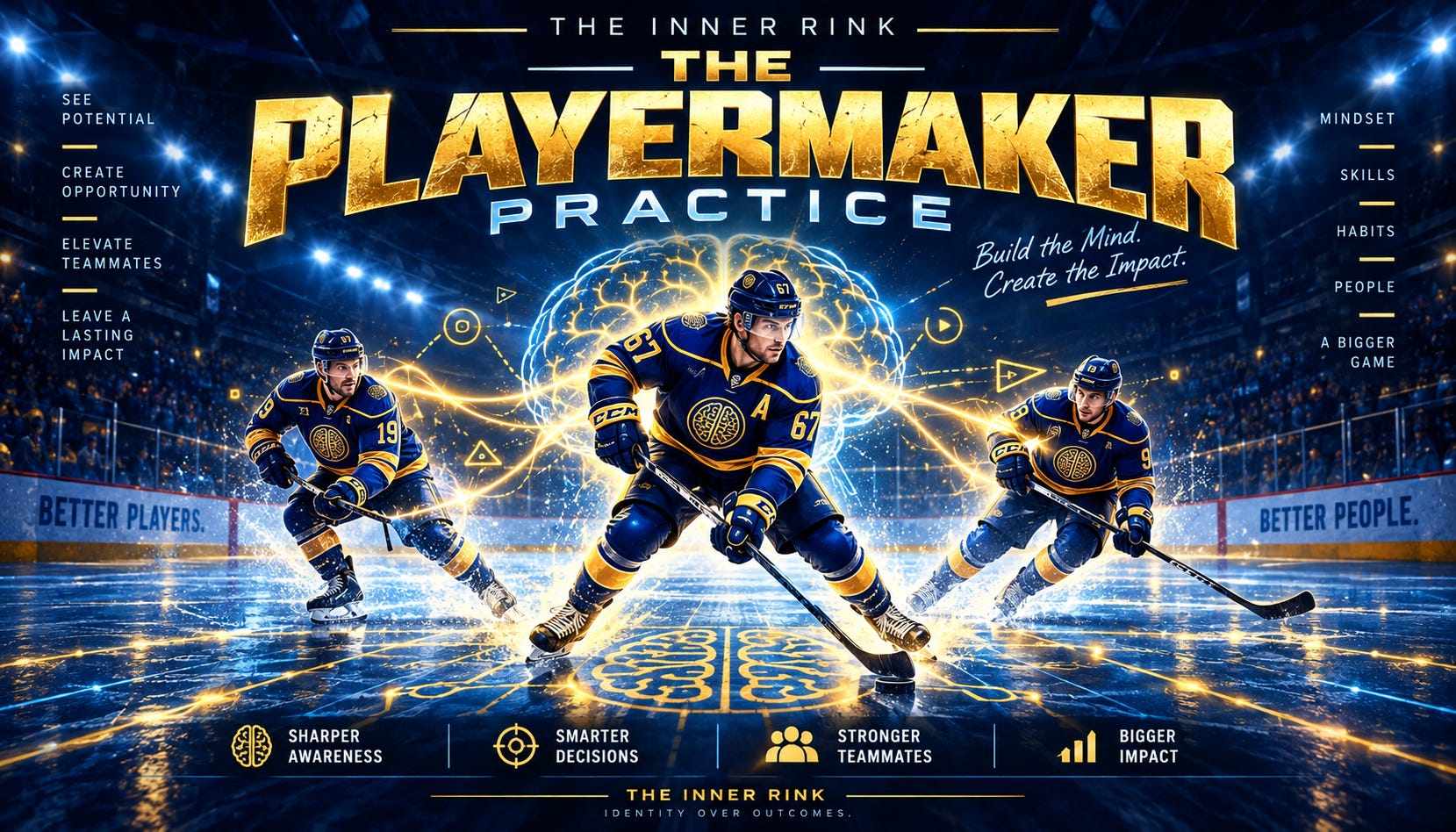
What is a PlayerMaker?
When you hear the word playmaker, you probably think about offense.
Someone who sees the ice. Creates space.
Finds the open guy. Makes something happen.
But a PlayerMaker is different.
A PlayerMaker doesn’t just create plays. They create players.
They see something in people that those people might not see in themselves yet.
They create confidence. Opportunity.
Belief. Standards.
They make teammates better. They make rooms better.
And eventually, they leave people better.
That’s the difference.
A playmaker changes what happens during the game. A PlayerMaker changes what happens inside people.
The Evolution
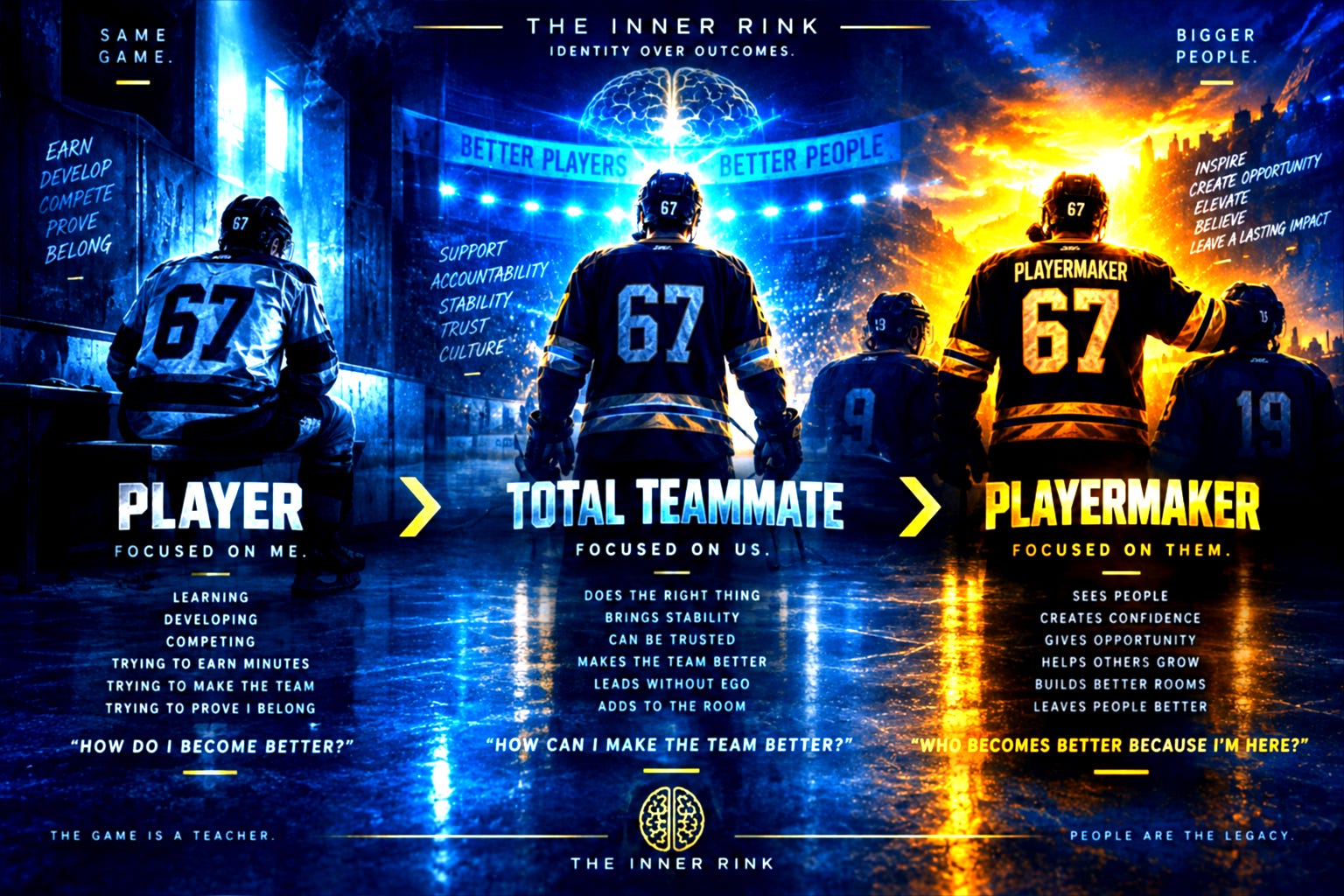
Everyone begins as a Player.
And there’s nothing wrong with that.
The Player is learning.
Developing. Competing.
Trying to earn minutes.
Trying to make the team.
Trying to prove they belong.
A lot of your attention has to be on yourself.
How am I playing?
What’s my role?
Am I getting enough ice?
What does the coach think of me?
What do I need to do to get better?
Those questions are part of becoming an athlete. But eventually, if you keep growing, something changes. You stop needing every moment to be about you.
You become a Total Teammate.
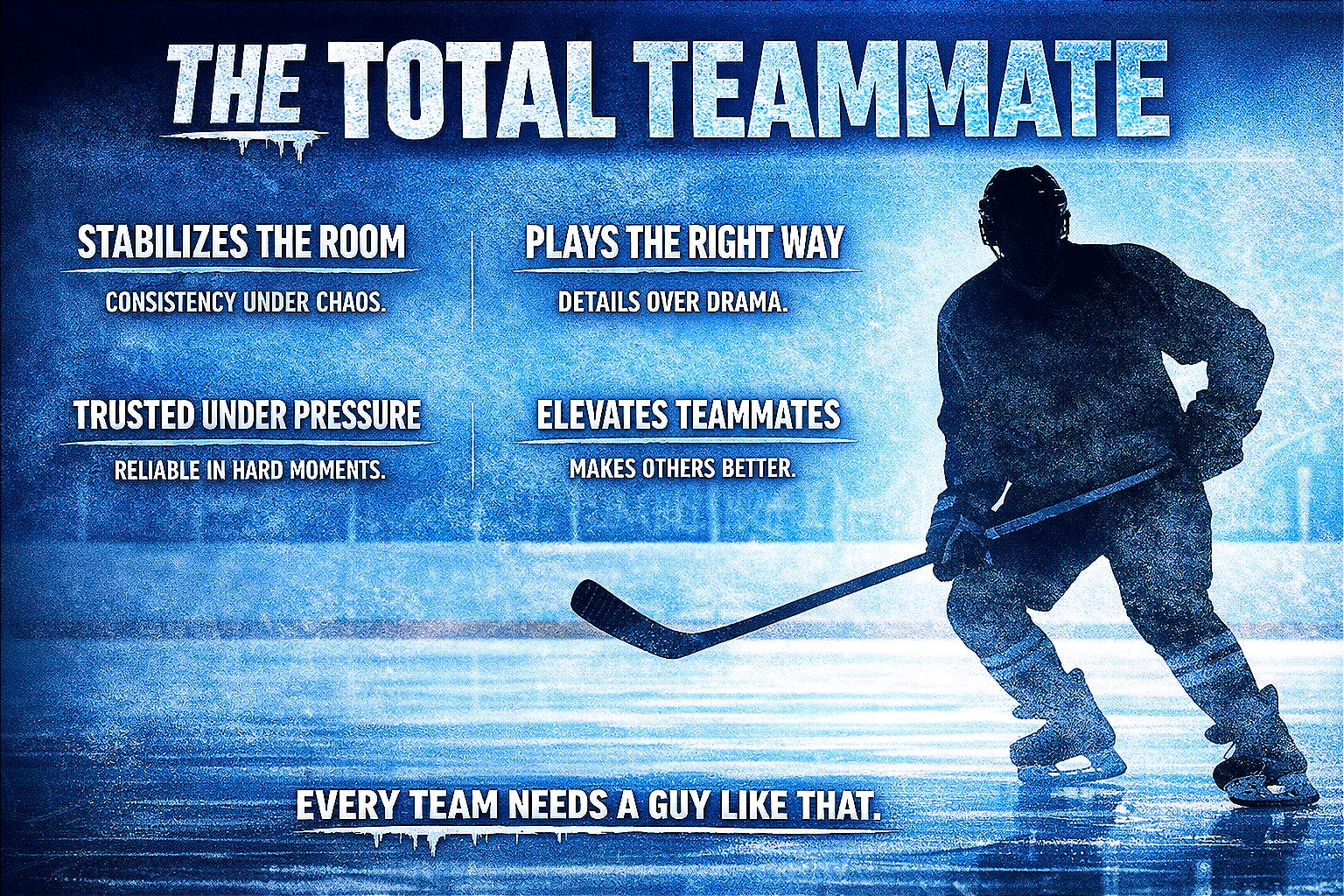
You learn that your value isn’t limited to production.
You can stabilize the bench.
Protect confidence.
Do the invisible work.
Make the game easier for the people around you.
The Total Teammate asks:
What does the team need from me?
and then eventually… another shift happens.
You stop thinking only about what the team needs from you and begin thinking about what the people around you could become.
That’s the PlayerMaker.
The Player asks: How do I become better?
The Total Teammate asks: How can I make the team better?
The PlayerMaker asks: Who becomes better because I’m here?
Player.
Total Teammate.
PlayerMaker.
Not titles.
Not awards.
Not something somebody gives you.
A progression in who you become.
You Have To Make Yourself First
Here’s the part that matters. You can’t skip ahead.
You can’t consistently bring calm to other people if you haven’t learned how to regulate yourself. You can’t give someone confidence if your own identity collapses every time you make a mistake. You can’t help somebody through adversity if you’ve never learned how to sit in your own.
You can’t become a PlayerMaker without first doing the work within your own Inner Rink. That’s what this entire season has been about.
RESET taught you to interrupt the reaction. To create space between what happens and what you do next.
RHYTHM taught you to regulate your tempo. To understand that you don’t have to move at the speed of the pressure around you.
FLOW taught you to trust. To stop forcing the game and allow preparation to become performance.
MASTERY brought everything together. Mind. Body. Identity. No longer fighting one another.
And the Total Teammate showed us what happens when that stability enters the room.
Now comes the final step.
Give it away.
The calm you built? Give it away. The confidence you found? Give it away. The lessons you learned the hard way? Give them away. The belief someone once gave you? Give it to somebody else.
That’s how a PlayerMaker is built.
What Most Players Miss
Sports naturally teach us to measure ourselves.
Goals.
Assists.
Points.
Minutes.
Contracts.
Awards.
Wins.
Losses.
We know exactly where we stand because there’s almost always a number telling us.
But some of the greatest impacts you’ll ever have can’t be measured that way.
There’s no stat for restoring a teammate’s confidence. No assist for saying exactly what someone needed to hear after a bad game. No plus-minus for changing the energy of a room. No award for showing a younger player how to carry himself. No box score for believing in someone before they believe in themselves.
But those moments matter.
Sometimes more than the ones everybody sees.
Because eventually statistics disappear.
Seasons end.
Teams change.
Careers end.
But people remember how you affected them.
The PlayerMaker Sees More
One of the greatest abilities a PlayerMaker develops is the ability to see beyond the moment.
A teammate is struggling. Most people see bad performance. The PlayerMaker sees someone losing confidence.
A young player is quiet. Most people assume they don’t have much to say. The PlayerMaker sees someone who might not feel like they belong yet.
A teammate makes a mistake. Most people see the mistake. The PlayerMaker sees the person who has to take the next shift.
That’s awareness. And that awareness changes how you lead.
Instead of asking: What did they do wrong?
You start asking: What do they need right now?
Maybe they need accountability.
Maybe they need encouragement.
Maybe they need honesty.
Maybe they need space.
Maybe they need somebody to look at them and say: I still trust you.
A PlayerMaker doesn’t treat everyone the same. They learn to see people.
Leadership Without The Title
You don’t need a letter on your jersey to become a PlayerMaker.
You don’t need to be the oldest player.
You don’t need to give speeches.
You don’t need everyone looking at you.
Some of the most influential people you’ll ever meet barely announce themselves.
They simply understand the moment.
They know when to speak.
When to listen.
When to challenge.
When to encourage.
When to create.
When to stabilize.
And sometimes…
when to get out of the way.
It’s called leadership without ego.
The goal isn’t: How do I get everyone to follow me?
It’s: How do I help everyone become more of themselves?
That’s a completely different kind of leadership.
Jessica’s Perspective — The Psychology of Elevation
Human beings don’t perform in isolation.
We constantly read the people around us.
Their body language.
Tone.
Confidence.
Stress.
Belief.
Whether we realize it or not, our internal states influence the environments we enter. That’s part of what makes teams so powerful. And so fragile.
Confidence can spread. Fear can spread. Composure can spread.
So can doubt. (tip:doubt your doubts)
The PlayerMaker understands that their internal state doesn’t end with them. The more regulated and secure they become, the more capacity they have to support someone else without absorbing that persons emotions or trying to control them.
That’s an important distinction.
Making someone better doesn’t mean fixing them.
It doesn’t mean carrying them.
And it doesn’t mean making them dependent on you.
Real influence creates more independence. You help someone access what was already inside them.
Sometimes through encouragement.
Sometimes through accountability.
Sometimes simply through your presence.
The best leaders don’t create copies of themselves.
They help other people become more fully themselves.
The Practice
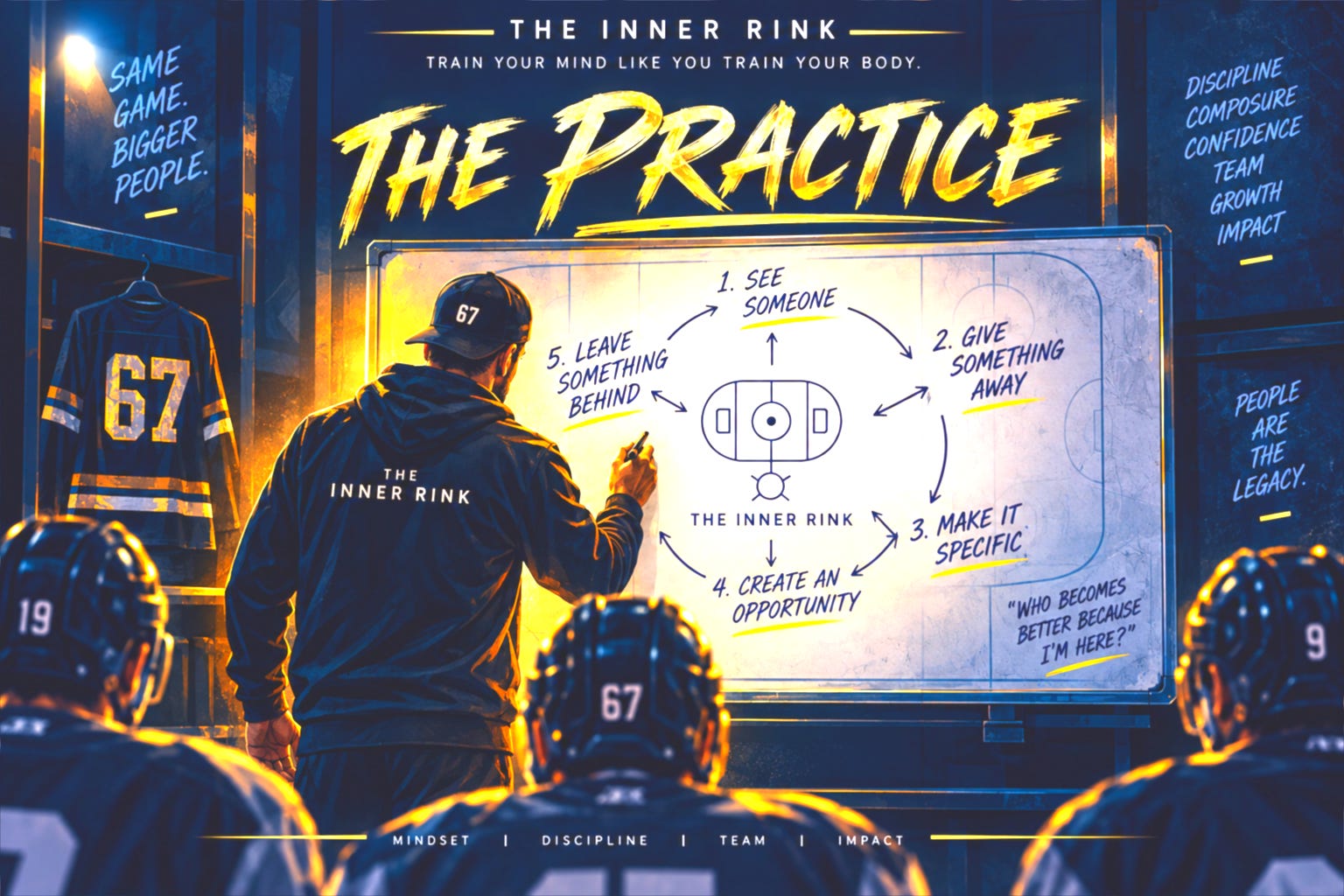
Becoming a PlayerMaker isn’t something you announce. It’s something you practice.
Start here.
See Someone
Pick one person today.
Not their stats.
Not their mistakes.
Not their role.
Them.
Pay attention.
Where might they need confidence?
Direction?
Accountability?
Or simply someone who believes in them?
Don’t immediately try to fix anything.
First, learn to see them.
Give Something Away
Maybe it’s something you learned.
Maybe it’s encouragement.
Maybe it’s an opportunity.
Maybe it’s confidence.
Maybe it’s five minutes of your time.
Take something the game, or life, gave you and intentionally give it to somebody else.
Make It Specific
Don’t just say: “Good job.”
Tell them what you saw.
“That was a great read.”
“ I noticed how hard you competed there.”
“ Keep doing that. That’s your game.”
Specific belief gives people something they can actually hold on to.
Create An Opportunity
Sometimes making somebody better means giving them room.
Pass them the puck.
Ask what they think.
Let them lead.
Give them responsibility.
A PlayerMaker doesn’t need to be at the center of every moment. Sometimes leadership means creating the moment for somebody else.
Leave Something Behind
Before you leave the rink today, ask:
Who became better because I was here?
You might not always know the answer. That’s okay.
The point is to start living in a way where the question matters.
The PlayerMaker Code
A PlayerMaker follows a simple code:
Make yourself first.
See the person beyond the performance.
Give confidence without creating dependence.
Challenge people without diminishing them.
Share what you’ve learned.
Create opportunity for others.
Protect the standard without protecting your ego.
Know when to speak, listen, challenge, encourage — or get out of the way.
Leave people and places better than you found them.
The goal isn’t to make people more like you.
The goal is to help people become more fully themselves.
Reader Reflection
Think about someone who helped make you.
A coach.
A teammate.
A parent.
A teacher.
A friend.
Someone who something in you before you fully saw it yourself.
What did they give you?
Confidence?
Opportunity?
Honesty?
Patience?
Belief?
Now turn the question around.
Who am I becoming that person for?
Who trusts themselves more because they know me?
Who believes a little bit bigger because I believed first?
Who becomes more confident when I’m around?
Who might someday look back and realize that something I said, did, or modeled changed their direction?
And maybe the most important question of this entire practice:
Who becomes better because I’m here?

☀️Beyond The Rink
You don’t need skates to become a PlayerMaker.
Parents can be PlayerMakers.
Coaches can be PlayerMakers.
Teachers can be PlayerMakers.
Leaders can be PlayerMakers.
Friends can be PlayerMakers.
Mentors can be PlayerMakers.
Because eventually, the game ends.
The locker room gets quiet. The gear gets put away.
Someone else wears your number.
Eventually, the ice melts for everyone. But the ability to see people, believe in them, challenge them, and help them become more fully themselves goes with you.
The arena changes. The practice doesn't.
Sometimes the most important thing you’ll ever give another person isn’t an answer. It’s belief. The belief that they’re capable of becoming something they haven’t learned to see in themselves yet.
And sometimes, years later, they become that person. Maybe they even give that belief to somebody else.
That’s when influence becomes legacy.

Season One
This season started with one idea: Train your mind like you train your body.
So we practiced.
RESET taught us to come back to ourselves.
RHYTHM taught us to regulate the tempo.
FLOW taught us to stop forcing performance.
MASTERY taught us what happens when preparation, confidence, and identity stop fighting one another.
Those practices gave us tools. But the tools were always meant to become something.
We began as the Player.
Learning. Competing. Becoming.
Then we became the Total Teammate.
Someone others could trust. Someone who could stabilize the environment instead of adding to its chaos.
And now… the PlayerMaker.
Someone who takes everything they’ve built inside themselves and uses it to make the people around them better.
PLAYER → TOTAL TEAMMATE → PLAYERMAKER
The work started within. Then it entered the room. Now it reaches somebody else.
The Between Shifts practices gave us the tools. The 3 Inner Rink identities show us what those tools can become.
Season One may be complete. But the real practice is living it.
🧠Final Thoughts
When I started the Inner Rink, I wanted to be the guy I wish I had when I was chasing the dream.
But maybe that’s what this whole season has really been about.
Becoming that person. For yourself first. Then for your teammates. And eventually…
for somebody coming behind you.
You don’t have to change everybody. You don’t need a platform. You don’t need a title. You don’t need anyone to know you did it.
Just make one person better. Then another. And another.
The greatest thing the game can give you might not be the player you became. It might be the ability to help someone else become who they’re capable of becoming.
So keep making yourself. Then give it away.
The calm.
The confidence.
The lessons.
The belief.
Because maybe one day, somebody will look back on their life and realize… you were the person who saw something in them before they could see it themselves. And maybe they’ll do the same for somebody else.
That’s bigger than a stat.
Bigger than a game.
Bigger than a career.
A PlayerMaker doesn’t just make plays. A PlayerMaker makes people better.
That’s The PlayerMaker.
That’s The Inner Rink.
Thank yourself for showing up to practice.
Season One complete.
— Joe Drapluk
The guy I wish I had when I was chasing the dream.
Where This Fits
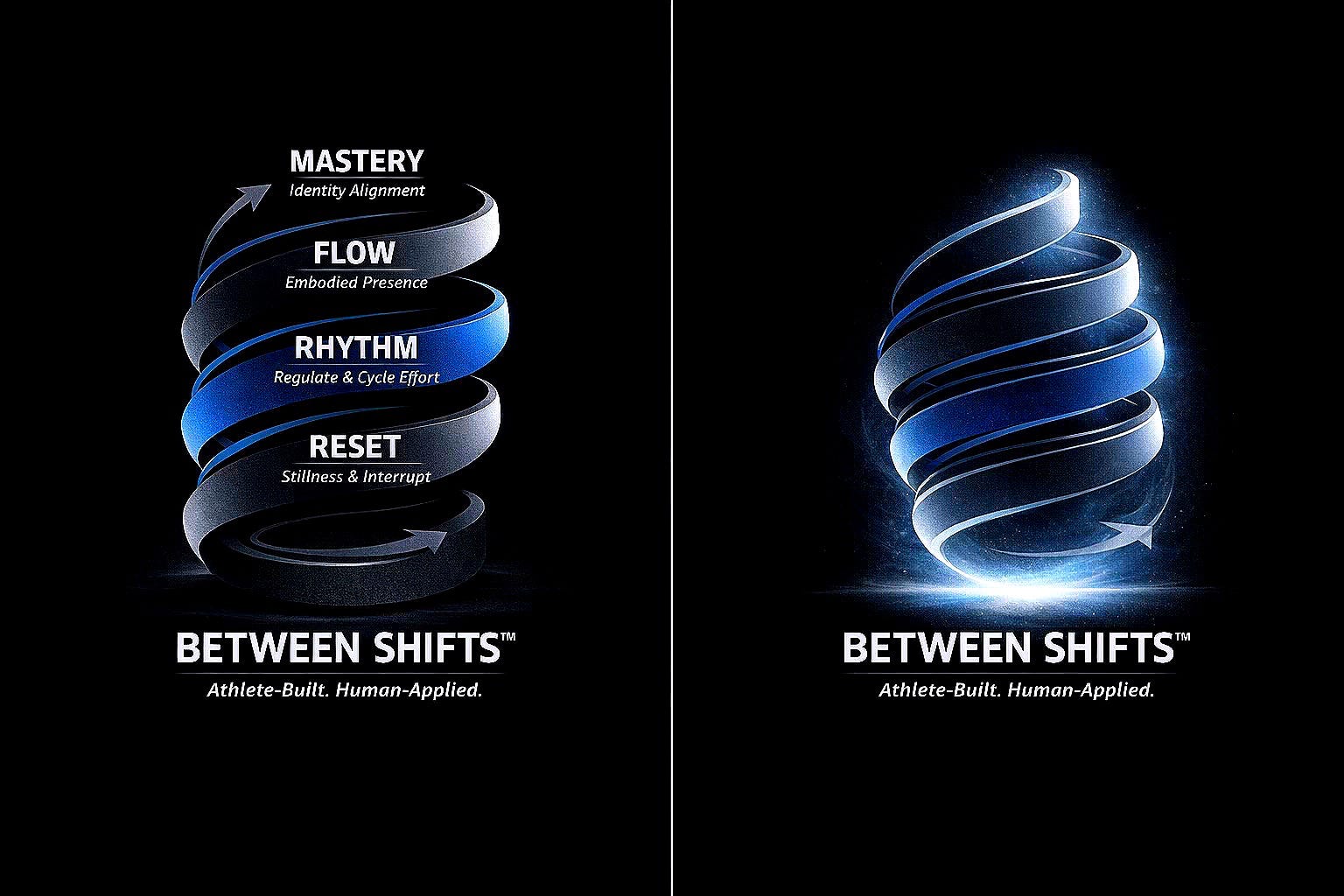
Between Shifts trained the inner skills:
RESET → RHYTHM → FLOW → MASTERY
The Inner Rink identity evolves through:
PLAYER → TOTAL TEAMMATE → PLAYERMAKER
Train within. Stabilize the room. Elevate the people around you.
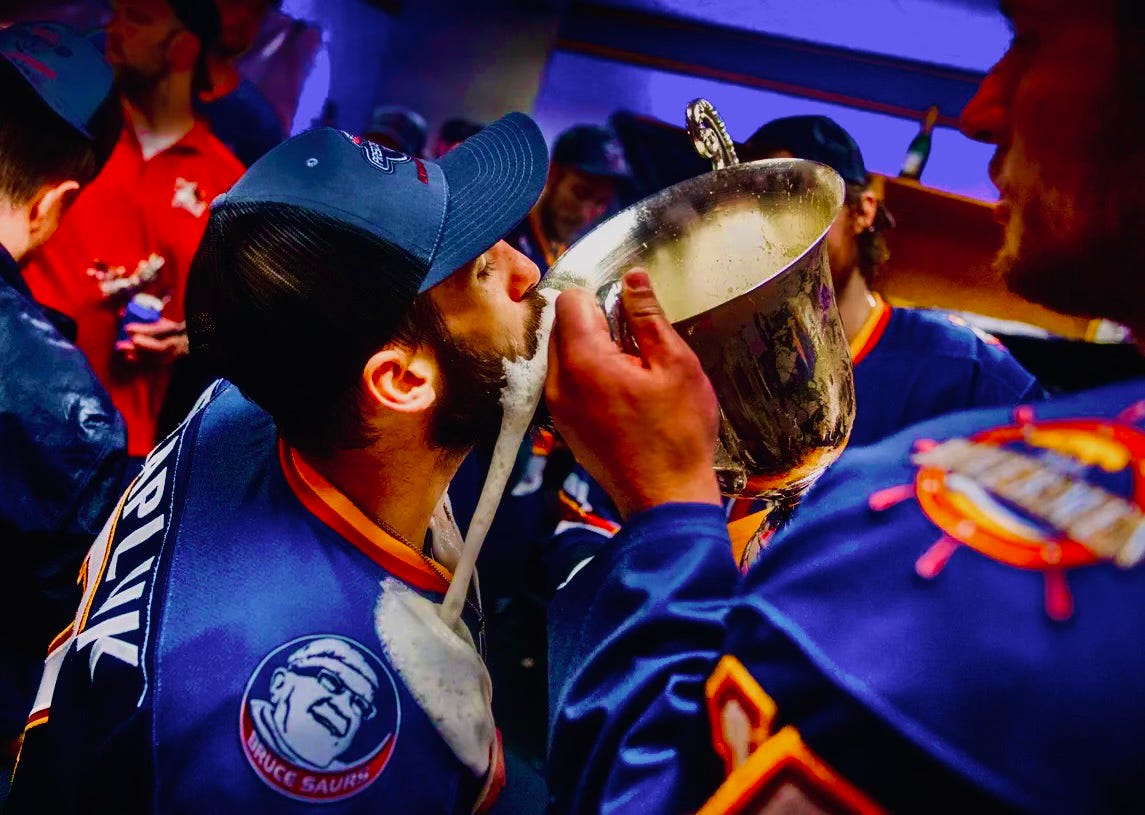
🏆Up Next in The Inner Rink:
Season One is complete. But The Inner Rink isnt. This season was about building the foundation.
RESET → RHYTHM → FLOW → MASTERY (skill)
PLAYER → TOTAL TEAMMATE → PLAYERMAKER (identity)
We trained the Inner Rink. Now it’s time to live it.
As a new hockey season begins, so does a new chapter of the Inner Rink. Season two will be different. Less looking back. More from inside the moment.
The pressure. The preparation.
The wins. The losses.
The uncertainty. The lessons you don’t get until you’re actually living them.
I’ll be stepping back onto the ice this season- and bringing The Inner Rink with me. Not after the story is finished. While it’s happening.
The Inner Rink Season Two — Coming Soon! (10/04/2026)
The game continues. So does the practice.
DISCLAIMER
The Inner Rink shares educational content for athletes and readers interested in performance psychology, mindset, and discipline. It is not intended as medical, psychological, or therapeutic advice or to take the place of such advice or treatment from a personal physician. Always seek guidance from a qualified health care professional regarding your specific questions and individual situation.
GREAT POST!!!