


THE INNER RINK SEASON 2 PRACTICE 002
“The rhythm of the game doesn’t have to determine the rhythm within me.”
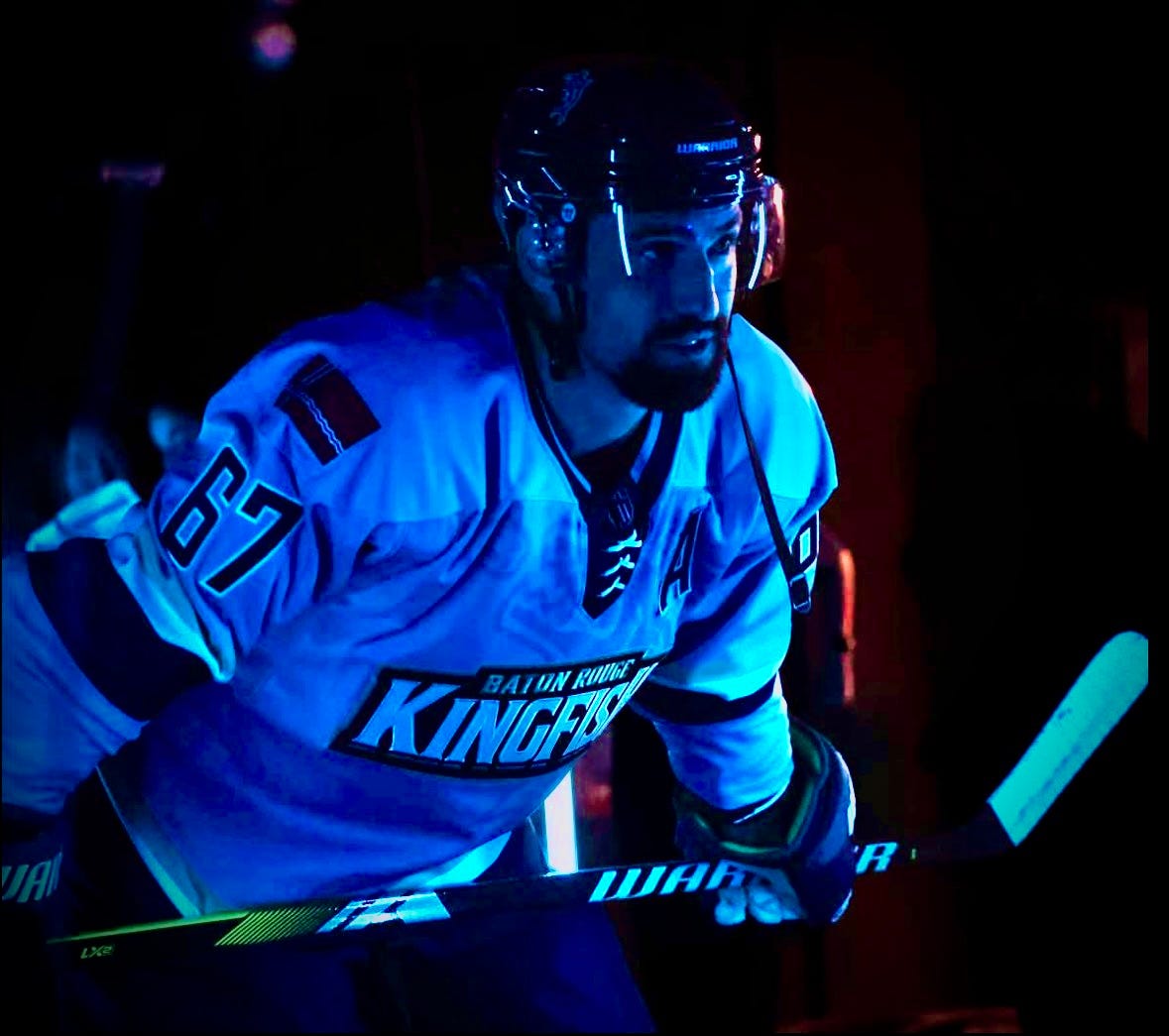
What’s up y’all! Draps here.
I co-create The Inner Rink — a practice about the psychology of performance, discipline, and greatness on and off the ice.
I’m a pro hockey player, writer, and mentor — here to be the guy I wish I had when I was chasing the dream.
Welcome back to Season Two of The Inner Rink.
The Inner Rink - LIVE.
Season One was about building the foundation.
RESET.
RHYTHM.
FLOW.
MASTERY.
Becoming a Total Teammate. And eventually, a PlayerMaker.
Season Two is about living that work. Not after everything has happened.
While it’s happening.
Last practice, Training Camp: The Tryout Within, we explored what it means to pursue an opportunity without losing yourself in the process. Now training camp is over. The roster has been made and the games have begun.
Five games into our season, we’re sitting at 3-2. Three wins. Two losses. And already, a whole lot more happening than the scoreboard could ever tell you. We’ve also got something going around our locker room lately.
DIALED.
“Let’s dial it in.”
“Get dialed.”
“Time to dial.”
Naturally, I had to take it a little further. I told the boys I was going to get on the phones and start dialing. Like we’re running a hockey version of The Wolf of Wall Street. Except instead of making sales calls, we’re trying to win hockey games.
But the more I thought about it, the more I realized that being dialed in is exactly what these first two weeks have been teaching me.
Sometimes being dialed in isn’t about doing more. Sometimes it’s about knowing what not to do. When to speak, listen, and respond. And when to stop reacting to everything happening around you.
This is where today’s practice begins.
Two Weekends. Two Different Experiences.
Our first weekend of the season? Two games. Two wins.
Not a bad way to start.
Then came our second weekend. Two road games. Two one-goal losses. And a Sunday home game where we found a way to finish the weekend with a win.
Five games. Three wins. Two losses. That’s what the record says. But here’s something I’ve learned throughout my years playing professional hockey. The scoreboard tells you what happened. It doesn’t always tell you what was happening.
There’s another game being played that people don’t always get to see. The Game Between Games.
The preparation.
The conversations.
The adjustments.
The physical demands.
The emotions.
The things happening away from the ice that don’t disappear just because it’s time to play hockey. Sometimes those things can influence how a team shows up.
We’ve already experienced adversity as a group. We’ve been short on players. We’ve had challenges to navigate behind the scenes. And while certain things belong inside the locker room, the lessons we take from them don’t necessarily have to stay there.
The Inner Rink isn’t about sharing everybody’s business. It’s about recognizing what happens inside us when circumstances change and learning how to respond without allowing those circumstances to change who we are.
When Playing Well Isn’t Enough
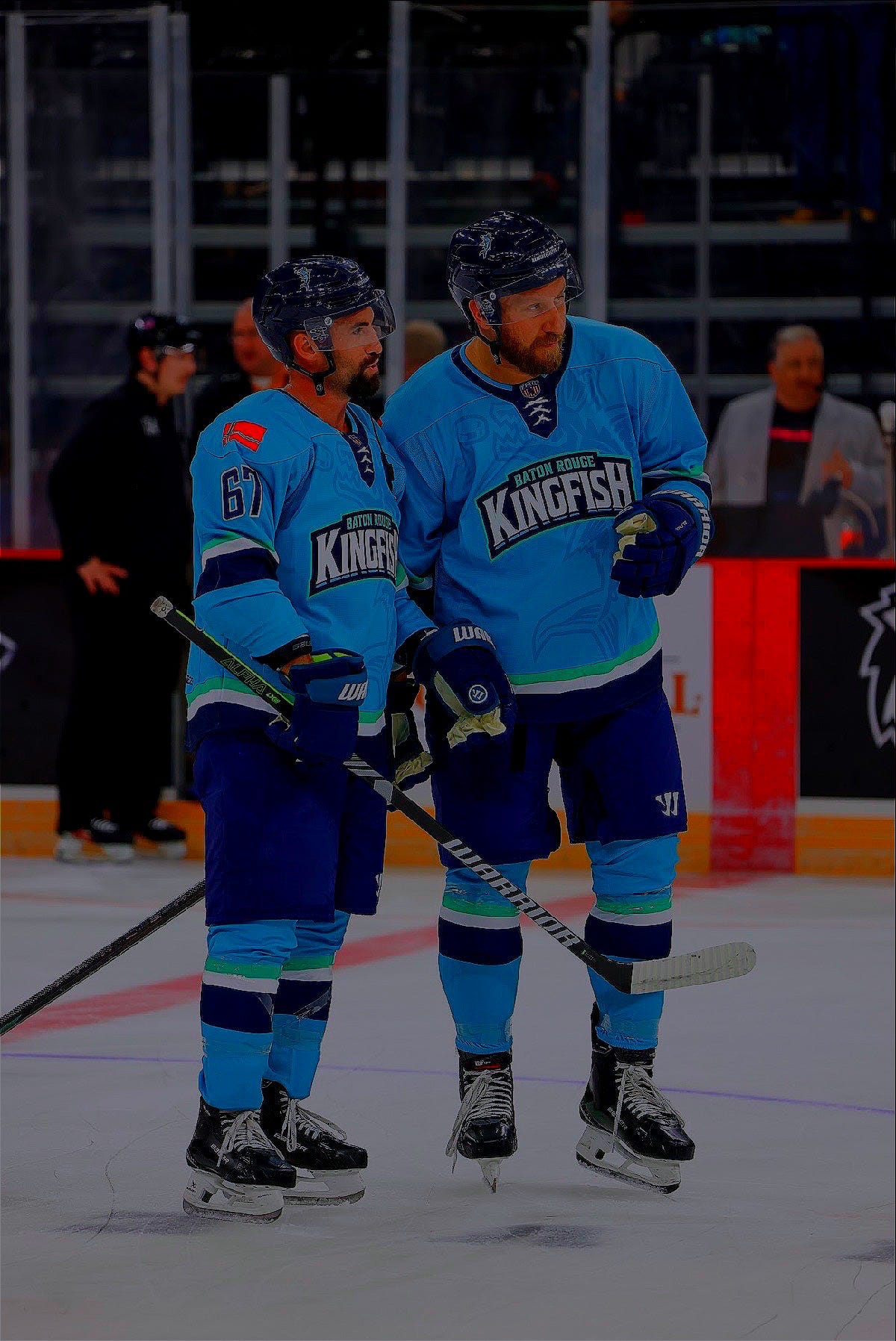
Here’s what made those two road losses interesting to me.
I felt like we played well enough to win both games. We lost each by one goal. We competed. We created opportunities. We never gave up. But something felt different.
The energy wasn’t quite the same. We weren’t as connected as I felt we could be.
We were short on players, and some of the guys who weren’t playing weren’t even at the games. I think sometimes we underestimate how much the presence of our teammates matters.
Not just what they contribute on the ice. But what they bring to the environment.
The energy. The encouragement. The feeling that everybody is in it together.
Looking back, I also wondered whether we might have underestimated our opponent a little. Maybe we came into those games feeling like we already had it done. Maybe we weren’t quite as dialed in as we needed to be.
I can’t say for certain. I don’t want to make excuses for losing. Sometimes you play good hockey and still lose. That’s the game.
You can execute well, compete hard, create opportunities, and still end up on the wrong side of the scoreboard.
A good performance doesn’t guarantee a good result. And a good result doesn’t necessarily mean everything went right. That’s something I think we need to remember beyond hockey, too.
If we evaluate ourselves by outcomes, we risk overlooking the things we’re actually doing well and the things we still need to improve.
After those two losses, I started thinking about something more personal. Not just how we played as a team. How I was experiencing the games inside my own Inner Rink.
The Noise of the Game
After Friday and Saturday, I spent some time reviewing my own performances.
Not just my shifts.
Not just the plays I made or didn’t make. But how I was responding to everything happening around me. And something stood out.
I felt like I might have gotten a little too caught up in the noise of the game.
The momentum swings.
The emotions.
The scoreboard.
The energy around me.
Instead of remaining more independent of those circumstances, I was allowing myself to get pulled into them.
Maybe I was trying to do to much. Maybe I was speaking up when I didn’t necessarily need to. Maybe I was reacting to certain moments instead of responding from the identity I’ve spent so much time building.
The interesting thing is…
Nobody else probably would have noticed the difference.
But I did.
I know what it feels like when I’m playing from my identity. When I’m calm, present, and trusting myself.
I also know what it feels like when I’m trying to create those things instead of simply allowing myself to experience them.
That is when I realized something. I was trying to be myself instead of just being myself. That might sound like a small difference but inside The Inner Rink?
It’s a big one.
The Rhythm of the Game vs. The Rhythm Within
Hockey is full of momentum swings. That’s never going to change.
The other team scores. You respond.
You make a mistake. You get another opportunity.
The crowd gets loud. The energy shifts.
Sometimes the entire feeling of the game changes within few seconds.
Here’s what I’ve been learning…
The rhythm of the game doesn’t have to determine the rhythm within me.
When my internal state is constantly moving with every external change, I start allowing the game to dictate how I experience it.
My emotions rise and fall with the scoreboard.
My confidence can become dependent on the previous shift.
My attention moves toward things I can’t control.
And before I know it, I’m reacting to the game instead of playing from my identity. That’s not where I want to operate from.
I want to play from my preparation, my instincts, and from the player I know I am.
A PlayerMaker.
Being a PlayerMaker doesn’t mean I’m immune to frustration. It doesn’t mean I don’t care about winning. It doesn’t mean I never experience the emotions of competition.
It means I recognize those emotions without allowing every one of them to determine my next action.
The game is going to move. The momentum I going to swing. The circumstances are going to change. But I don’t have to swing with every one of them.
And that is what I wanted to bring into Sunday’s game.
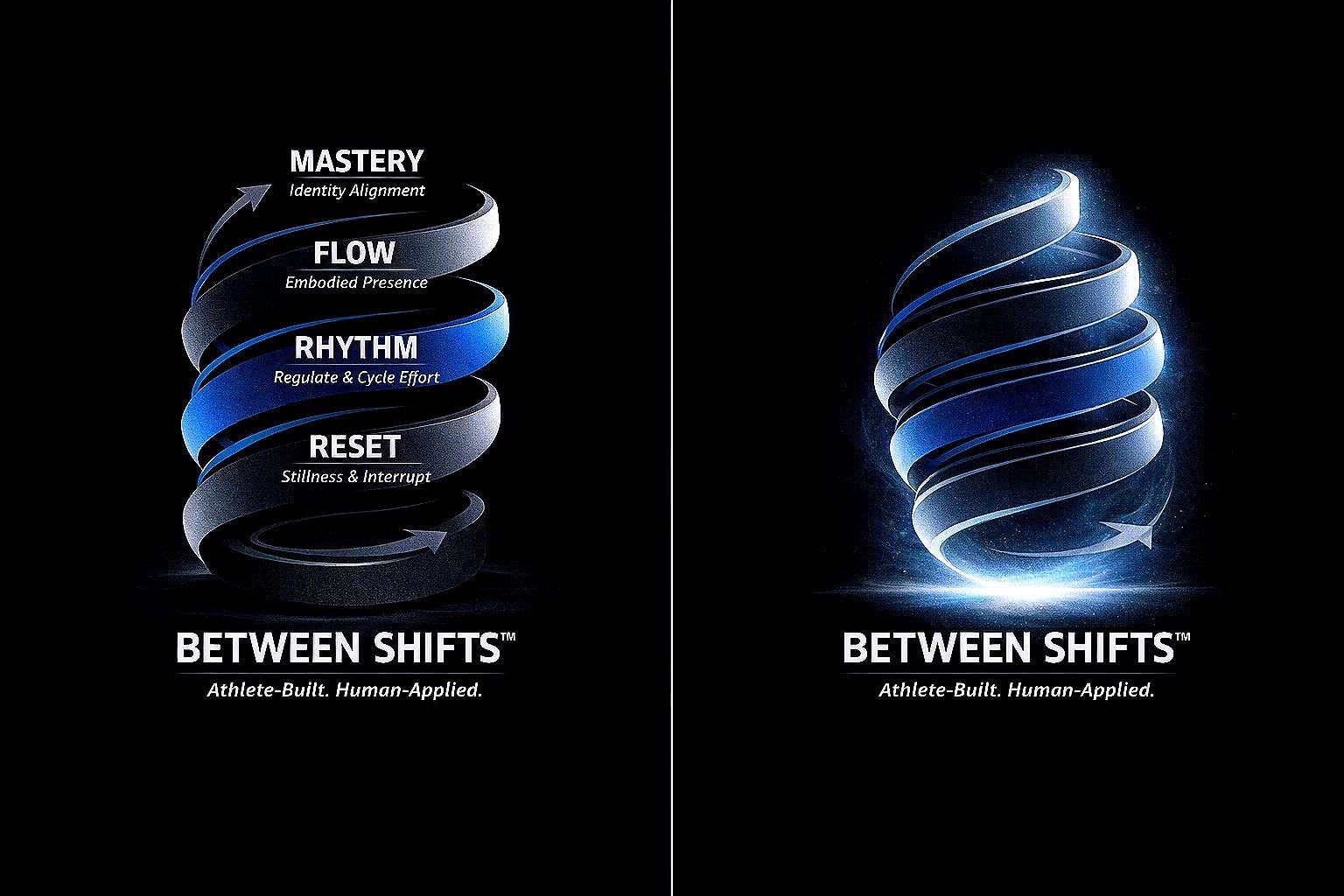
Regulating vs. Trying to Regulate
When we returned home on Sunday, something felt different.
Everybody was there.
The locker room felt more complete. The energy felt more alive.
More connected. More like us.
Heading into that game, I had made a conscious decision. I wasn’t going to allow the noise to dictate my internal state.
Not the scoreboard. Not a goal against. Not a momentum swing. Not the things happening around me that I couldn’t control.
I was going to remain connected to who I am and that didn’t mean I needed to do more.
I didn’t need to speak just to speak, I didn’t need to manufacture energy and I didn’t need to force myself into a leadership moment just because something happened.
I could recognize what was happening, trust myself, and respond when a response was actually needed.
Sometimes the best thing I can bring to my teammates is my composure.
My presence.
My ability to remain steady when things around me aren’t.
That’s what felt different on Sunday.
I wasn’t trying to regulate myself through every moment. I was returning to the regulation I’d already practiced.
There’s a difference.
When you’re constantly trying to regulate, you can become so focused on managing yourself that you’re no longer fully present in what you’re doing. But when you’ve practiced returning to yourself enough times, you begin to trust that foundation.
You recognize the noise. You recognize the emotions. You don’t necessarily have to do something about every single one of them.
You can let them pass.
Stay present.
Respond when needed and remain quiet when it isn’t.
That doesn’t mean every moment feels calm.
It doesn’t mean you never have to consciously RESET.
It certainly doesn’t mean you’ve mastered everything. But it means you’re becoming more aware of when you’re operating from your identity and when you’re being pulled away from it.
Sometimes the most important shift you make during a game is one nobody else can see. (The Shift No One Sees)
That’s why this work matters.
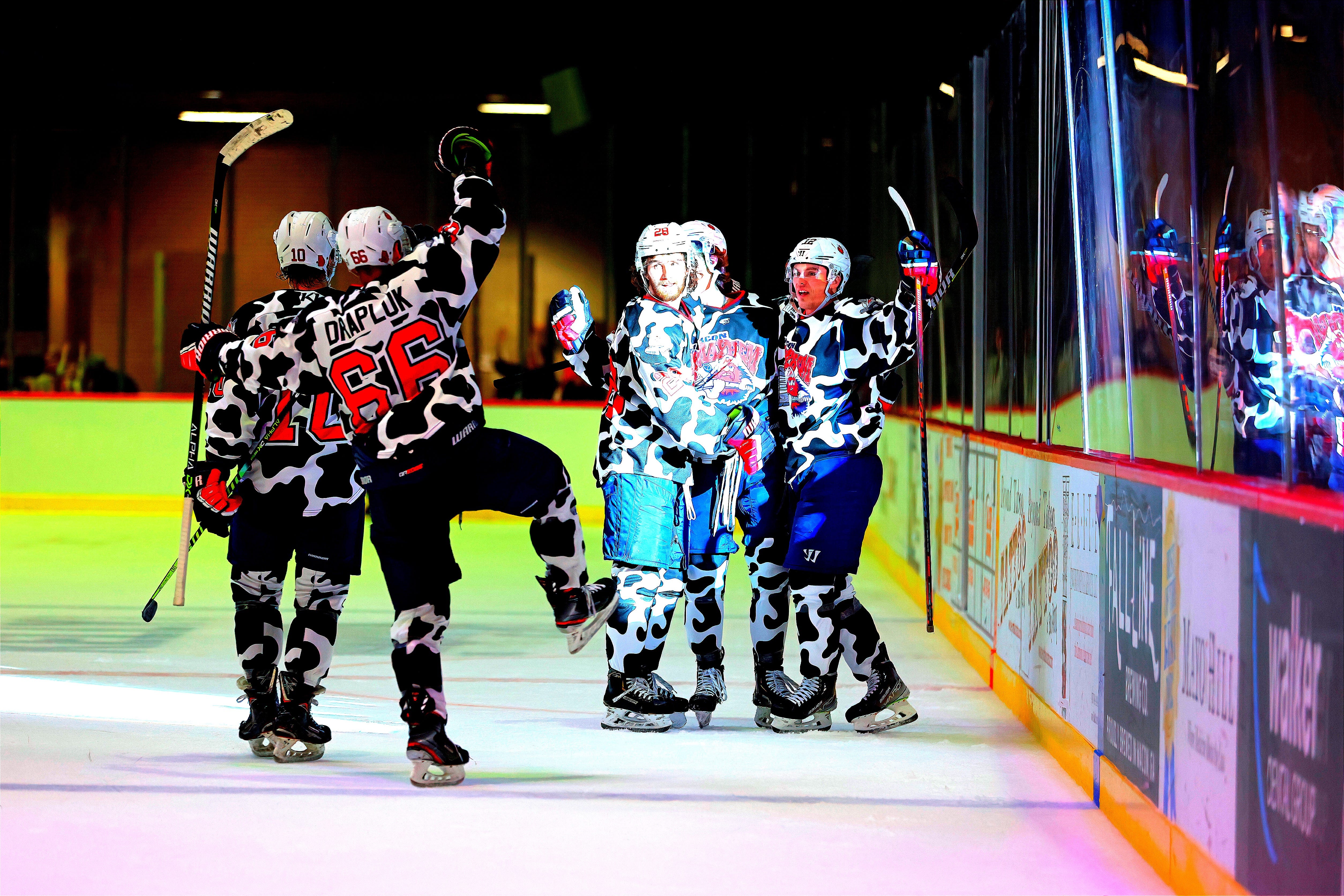
We won Sunday’s game.
And I’m grateful we did. But I don’t want to mistake the outcome for the entire lesson.
We had a more complete group, the energy felt different and I felt more connected to myself.
All of those things were part of the experience.
I can’t say exactly what caused us to win. But I can recognize what changed within me.
And that’s something I can continue practicing regardless of what the next scoreboard says.
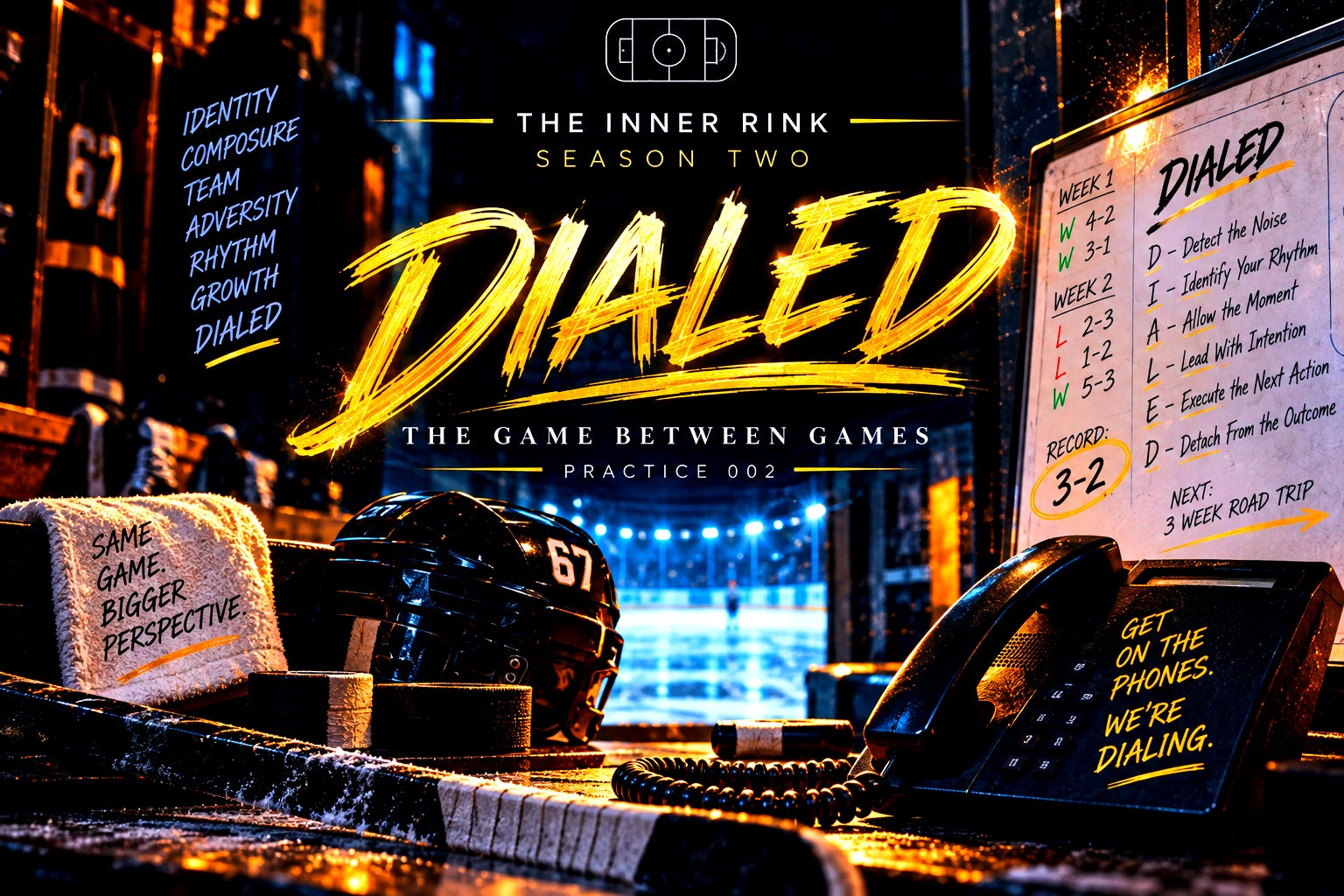
What it Means to Be DIALED
So let’s come back to that word.
DIALED.
It’s become something the boys have been saying around the locker room.
And I love it.
Because it’s simple.
It’s fun.
And everybody understands what it means.
Focus up.
Lock in.
Be ready.
But after these first two weeks, I’ve started thinking about what being dialed in really means inside The Inner Rink.
Sometimes we associate being dialed in with intensity.
Getting louder. Getting fired up.
Doing more. Pushing harder.
Sometimes those things are exactly what’s needed. But not always. Sometimes being dialed in means slowing yourself down.
Taking a breath. Listening.
Recognizing that the moment doesn’t need another reaction.
It needs a response.
It’s understanding that you don’t have to create momentum by yourself. You have to contribute to the team in the way the moment actually needs. And sometimes it’s trusting that your preparation and identity are already there.
You don’t need to keep proving them to yourself.
Being dialed in isn’t about forcing your focus. It’s about knowing where to place it.
On your next shift. Your next decision. Your next opportunity to contribute.
Not the last mistake. Not the scoreboard. Not the noise.
The moment you’re actually in.
Maybe that’s why the joke about getting on the phones and dialing has stuck with me. Because there’s something funny about imagining the boys picking up the phones and getting to work. But there’s also something real underneath it.
When it’s time to go, we have to be ready to answer the call.
Not by becoming somebody else.
By showing up as who we’ve already worked to become.
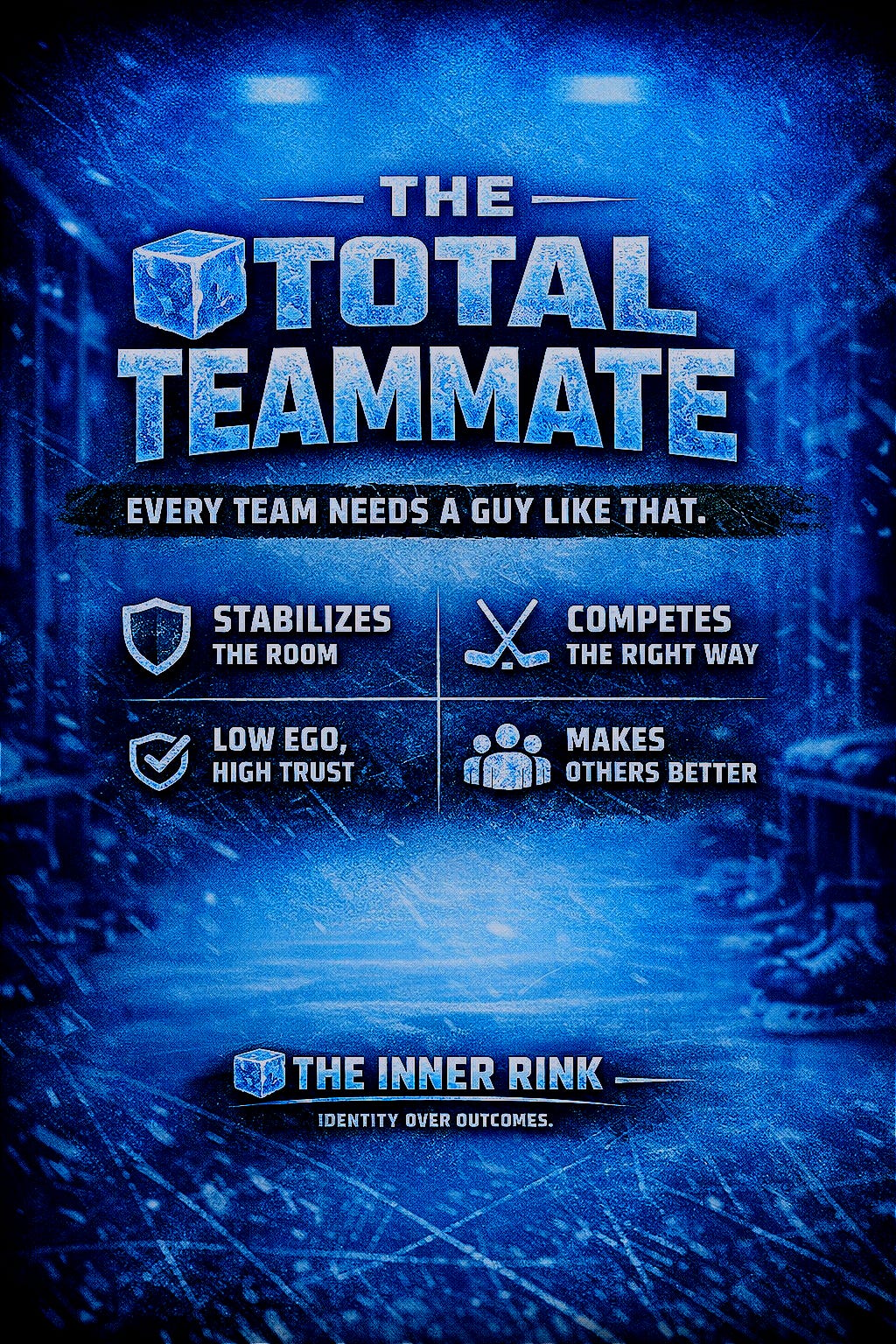
The Total Teammate — Energy Beyond the Ice
There’s another lesson from these first two weeks that I don’t want to overlook.
A team is more than the players taking shifts.
It’s everybody.
The guys in the lineup.
The guys who aren’t playing.
The players on the bench.
The people contributing behind the scenes.
Everybody plays a part in the environment we’re creating.
And while not everyone can always be present, I noticed how different it felt when we had our full group together on Sunday.
The energy was there.
The connection felt stronger.
And it reminded me of something we’ve explored through the Total Teammate and PlayerMaker identities.
Your contribution doesn’t begin and end with your ice time.
You can make a teammate better without touching the puck.
You can bring energy without scoring a goal.
You can help someone settle down without giving a speech.
You can contribute by listening.
By encouraging.
By being present.
And sometimes, by remaining composed when everyone else is getting caught up in the moment.
That doesn’t mean one person’s energy determines whether a team wins or loses.
Hockey is far more complicated than that.
But it does mean we all have an opportunity to influence the environment around us.
And I think that’s something worth carrying into the rest of this season.
Because being a PlayerMaker isn’t about being the loudest person in the room.
It’s about recognizing what the people around you need and contributing in a way that’s true to who you are.
Sometimes leadership is a voice. Sometimes leadership is a presence.
Knowing the difference?
That’s part of being dialed in.
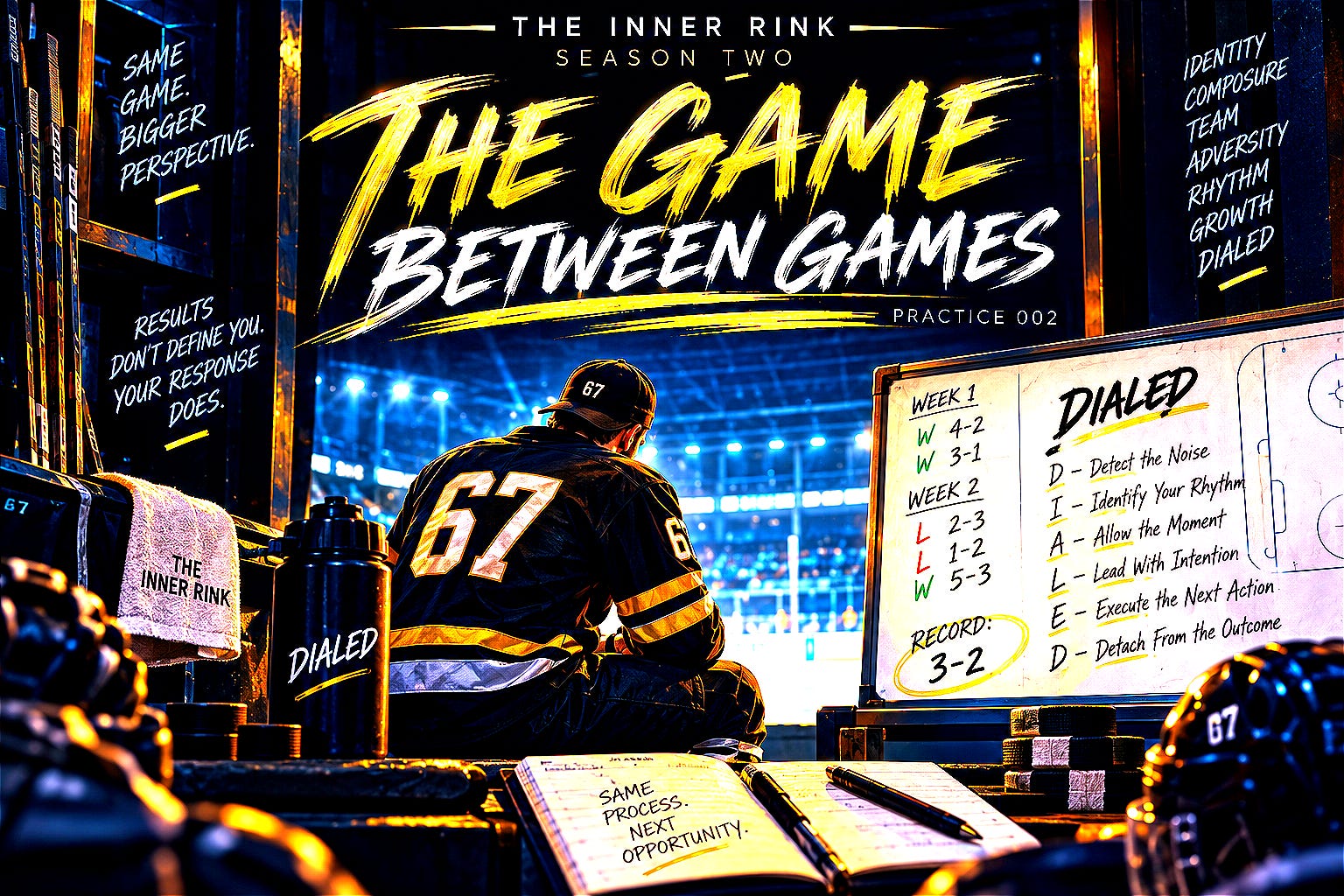
The Practice — DIALED: Return to Your Rhythm
This week’s practice is about recognizing when external circumstances are beginning to control your internal state.
You don’t need a hockey game to experience that.
It can happen during a difficult conversation.
At work.
In a relationship.
During a stressful decision.
Or anytime something doesn’t go the way you expected.
The goal isn’t to eliminate emotions.
It’s to recognize them, return to yourself, and choose your next response.
D — Detect the Noise
Notice when you’re getting pulled away from the present.
What’s happening around me?
What am I reacting to?
Am I responding to the situation, or am I reacting to how the situation is making me feel?
Don’t judge the emotion.
Just recognize it.
Awareness comes before adjustment.
I — Identify Your Rhythm
Return to your foundation.
Who am I?
What do I value?
How do I typically respond when I’m operating from my best self?
What does being grounded look like for me right now?
You don’t need to invent a new identity for every difficult moment.
Return to the one you’ve already been practicing.
A — Allow the Moment
Let the emotion exist without needing to immediately act on it.
Frustration.
Excitement.
Disappointment.
Pressure.
Whatever is present.
You don’t have to suppress it.
And you don’t have to follow it.
Take a breath if you need one.
Give yourself room to respond.
Not every feeling requires an action.
L — Lead With Intention
Ask yourself:
What does this moment actually need from me?
Do I need to speak?
Listen?
Compete harder?
Slow down?
Support someone?
Or simply stay present?
Choose the response that aligns with your identity rather than the reaction the moment is pulling out of you.
E — Execute the Next Action
Bring your attention back to what you can influence.
The next shift.
The next play.
The next conversation.
The next decision.
You don’t need to fix the entire game in one moment.
You need to be present for the next opportunity.
D — Detach From the Outcome
Once you’ve acted, allow the result to be what it is.
You can evaluate it.
Learn from it.
Make adjustments.
But you don’t have to carry every outcome into the next moment.
A mistake doesn’t have to become your identity.
A loss doesn’t erase your preparation.
And a win doesn’t mean the work is finished.
Detect. Identify. Allow. Lead. Execute. Detach.
That’s how we practice being DIALED.
Not a guarantee of winning.
A way to remain connected to ourselves while competing for the outcome we want.

Jessica’s Perspective — The Psychology of Staying Dialed In
There’s an important difference between experiencing an emotion and allowing that emotion to determine our behavior.
In high-pressure environments, our attention can become drawn toward whatever feels most urgent.
A mistake.
A change in momentum.
A disappointing result.
Another person’s reaction.
And when those moments begin to feel threatening, we may find ourselves responding more automatically than intentionally.
That’s not necessarily a lack of discipline.
It’s part of how human attention and emotion operate under pressure.
But with practice, we can become more aware of those responses.
And that awareness creates an opportunity to choose what happens next.
Emotional Regulation Isn’t Emotional Suppression
Regulation doesn’t mean eliminating frustration, excitement, or disappointment.
Those emotions are natural parts of competition and everyday life.
The goal is to develop the ability to experience them without allowing every emotional shift to dictate our behavior.
Sometimes that involves an intentional strategy.
Taking a breath.
Redirecting attention.
Changing how we interpret a situation.
Other times, it involves recognizing that a feeling is present and allowing it to pass without adding another reaction.
Both can be useful.
The important thing is flexibility.
We don’t need to respond to every situation in exactly the same way.
We need to recognize what the situation requires.
When Self-Monitoring Becomes Interference
There’s another interesting part of this experience.
The difference between regulating and trying to regulate.
When we become overly focused on monitoring our own performance or emotional state, we can sometimes interfere with processes that normally operate more naturally.
Instead of being fully engaged in the task, part of our attention becomes occupied with evaluating ourselves.
Am I calm enough?
Am I focused enough?
Am I doing this correctly?
That constant internal checking can become another source of pressure.
And in performance environments, attention is a limited resource.
This is why preparation and repeated practice matter.
They help us develop familiar ways of returning to the present without needing to consciously analyze every internal experience.
The goal isn’t to never think about your mental state.
It’s to develop enough awareness and trust that you don’t have to manage every moment.
Connection and the Team Environment
Our internal experiences don’t happen in isolation.
The people around us can influence how supported, connected, and prepared we feel.
A teammate’s encouragement.
A calm presence.
Clear communication.
A shared sense of purpose.
These things can shape the environment in which performance takes place.
But connection doesn’t mean everyone has to feel the same emotion at the same time.
A healthy team environment allows individuals to experience different emotions while remaining committed to shared goals.
And that brings us back to identity.
When we know what we value, we have something to return to when circumstances change.
Not a promise that everything will go our way.
But a foundation for deciding how we want to respond.
Being dialed in doesn’t mean being unaffected by the moment.
It means remaining intentional about how we participate in it.

☀️Beyond The Rink
Maybe you’ve experienced something similar without ever stepping onto a hockey rink.
You had a difficult day at work.
A conversation didn’t go the way you expected.
Someone said something that frustrated you.
A plan changed.
An opportunity didn’t work out.
And suddenly, your entire internal state started following the circumstances around you.
Maybe you reacted.
Maybe you tried to do too much.
Maybe you felt the need to explain yourself.
Prove yourself.
Fix everything immediately.
Or maybe you recognized what was happening and gave yourself a moment before responding.
That’s The Inner Rink.
The game between games exists everywhere.
It’s the space between what happens to us and what we choose to do next.
And we won’t always get it right.
There will be moments when we react.
Moments when we get caught up in the noise.
Moments when we lose our rhythm.
That’s part of being human.
But those moments don’t erase the work we’ve done.
They give us another opportunity to practice it.
You don’t have to control every circumstance to remain connected to yourself.
And you don’t have to force yourself to be calm to begin responding with intention.
Sometimes you simply have to recognize the noise, return to your identity, and take the next step.
That’s being dialed in.
🧠Reader Reflection
Think about a recent situation where the circumstances around you began influencing how you felt or behaved.
Ask yourself:
Was I responding to the situation, or reacting to the emotion it created?
Was I trying to control something that wasn’t mine to control?
Did I feel the need to do or say more than the moment actually required?
What does my natural rhythm feel like when I’m connected to my identity?
How could I have contributed to the people around me without getting caught up in the noise?
What can I carry into my next opportunity?
And one final question:
Am I trying to become the person I want to be in the moment, or am I trusting the person I’ve already been practicing to become?
💧Final Thoughts — The Road Ahead
Two weeks.
Five games.
Three wins.
Two losses.
And already, plenty of lessons.
We’ve experienced the excitement of starting the season with two wins.
The frustration of losing two close games on the road.
The energy of returning home with our full group.
And the satisfaction of finishing that second weekend with a win.
But the biggest lesson I’m taking from these first two weeks isn’t about our record.
It’s about recognizing the difference between the rhythm of the game and the rhythm within me.
Because the game is always going to change.
Momentum will swing.
Mistakes will happen.
Challenges will arise.
And not everything happening behind the scenes will be within our control.
But how we respond?
That’s something we can continue practicing.
Now we’re getting ready to embark on a three-week road trip.
Three weeks away from home.
New environments.
New opponents.
More time together as a team.
More opportunities to learn.
And probably a few more unexpected challenges along the way.
I don’t know exactly how those three weeks will unfold.
But I do know how I want to approach them.
As a Total Teammate.
As a PlayerMaker.
And as someone who’s continuing to practice what it means to remain true to himself while everything around him keeps moving.
Because Season Two isn’t about proving that we’ve mastered The Inner Rink.
It’s about living the work while the story is still being written.
And if there’s one thing I’m carrying into this road trip, it’s this:
I don’t need to control the rhythm of the game.
I need to remain connected to the rhythm within me.
And when the moment calls?
Well…
I guess it’s time to get on the phones.
We’re dialing. 📞🏒
Thank yourself for showing up to practice.
— Draps
The guy I wish I had when I was chasing the dream.
🏆Up Next in The Inner Rink
Season Two — LIVE
Three weeks on the road.
New opponents. New environments. New challenges.
And more opportunities to put the work into practice.
Not after the story is finished.
While it’s happening.
The game continues. So does the practice.

DISCLAIMER
The Inner Rink shares educational content for athletes and readers interested in performance psychology, mindset, and discipline. It is not intended as medical, psychological, or therapeutic advice or to take the place of such advice or treatment from a personal physician. Always seek guidance from a qualified health care professional regarding your specific questions and individual situation.
GREAT post!!!
awesome article!