


You don’t play like the player you are. You play like the player you believe you are.”

What’s up y’all! Draps here.
I co-write The Inner Rink—a weekly practice about the psychology of performance, discipline, and greatness—on and off the ice.
I’m a pro hockey player turned writer and mentor—here to be the guy I wish I had when I was chasing the dream.
I’ve spent years training my mind the same way I trained my body.
Systems.
Skills.
Structure.
And then, the mental game behind all of it.
At every level—youth, junior, college, pro—I learned one truth:
Your mind decides your ceiling long before your skills ever do.
And whether you’re aware of it or not, there’s always a story playing in the background.
That story becomes your identity.
Let’s begin.
Welcome back to The Inner Rink—where we break down the psychology of performance, discipline, and greatness, on and off the ice.
In our last practice, we talked about The Shift No One Sees — the moment between shifts where you either react or RESET.
Today, we’re going one level deeper.
We’re going inside The Story You Tell Yourself — the quiet narrative in your head that decides whether you feel like you belong or like you’re one shift away from losing everything.
Your career is influenced by your skill.
But your experience of that career?
That’s shaped by a story.
The Story You Tell Yourself.
Let’s break it down.

Identity Beats Talent- Every Time
Here’s the truth most players never hear clearly:
You don’t perform based on your full potential. You perform based on the identity you’ve accepted.
If your story is:
“I’m streaky.”
“I always mess up in big moments.”
“Coaches never like me.”
“I’m just grinding to survive.”
You’ll find a way to prove that true.
Not because you’re weak. Because your mind is loyal to the story it knows.
But when your story becomes:
“I belong here.”
“I’m the kind of player who adjusts, learns, and responds.”
“Pressure doesn’t expose me- it reveals me.”
Now your brain filters reality differently.
Same rink.
Same jersey.
Different story.
Different experience.
That’s the real Inner Rink.
Not just how you think- but who you believe you are.
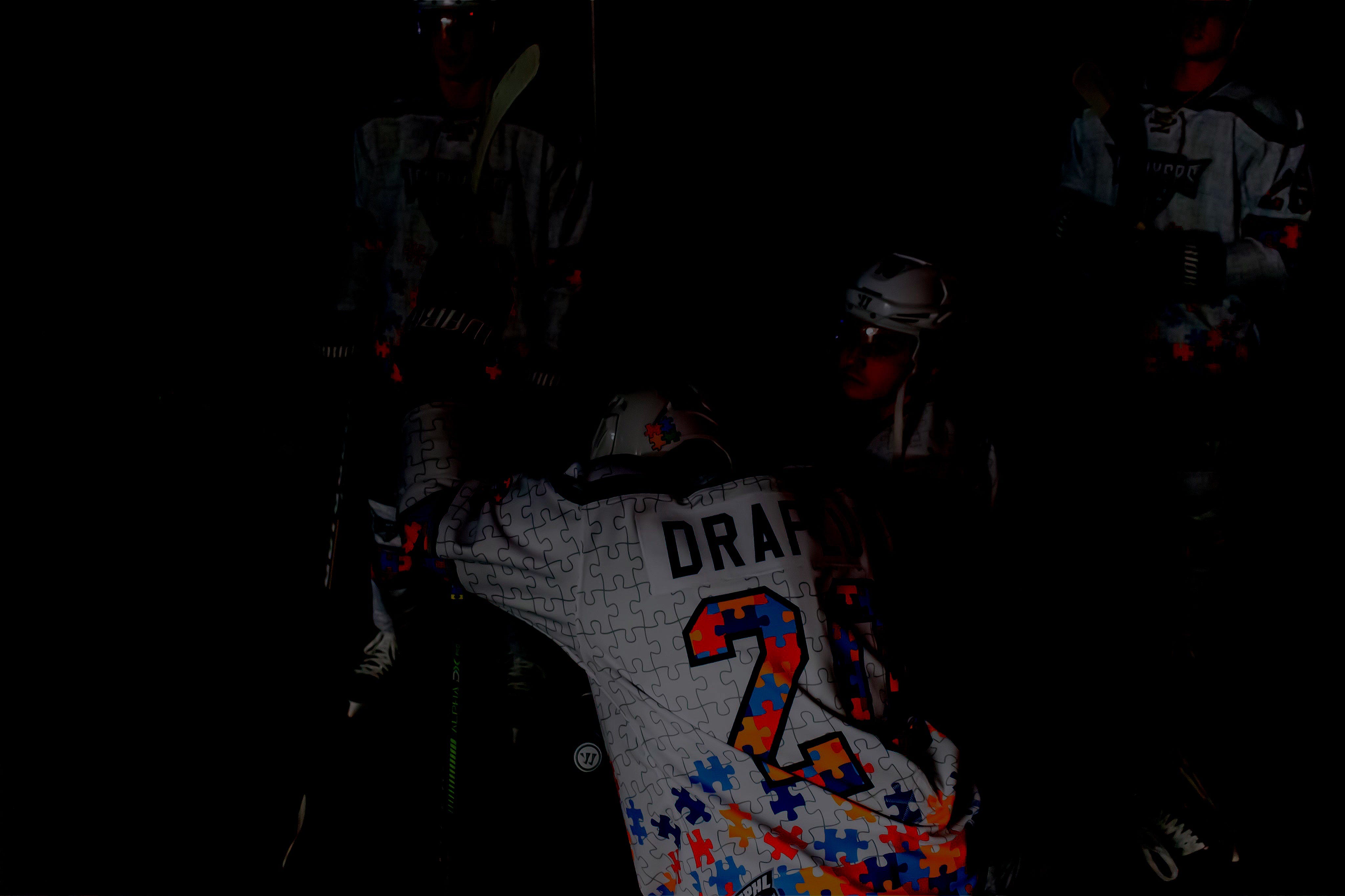
My First Pro Season: When My Identity Was Tested
I’ve always known who I am as a player. Even as a kid.
Team-first.
Defense-first.
Unselfish.
Hardest worker in the room.
The player who does the little things.
The one who shows up when it matters most.
Internally- I’ve always known that.
Externally? That was a different story.
For most of my career, I lived in a constant battle between what I believed about myself… and what other people told me I was.
Coaches.
Parents.
Stats.
Score sheets.
Lineups.
Opinions from the outside.
All of it made its way into my Inner Rink.
Slowly, I started trusting their story more than my own.
That changed during my first year of pro hockey.
I was constantly being moved between forward and defense.
No role.
No consistency.
No explanation.
Just:
“Play here tonight.”
“No, you’re here now.”
“Actually, back to the other side.”
At the time, I hated it.
I felt lost.
Frustrated.
Like a piece being moved instead of a player being developed.
I started questioning:
Who am I actually?
What am I supposed to be?
Am I even wanted here?
It felt like someone else was writing my career.
And then life stepped in and made sure I couldn’t ignore the real issue anymore.
I got sick. Kept playing through it.
Sicker.
Weaker.
Losing weight.
Barely functioning.
After weeks of not improving. I finally admitted myself into the hospital.
That’s when I heard the words:
Rhabdomyolysis. Stay overnight. Possibly longer.
While I was lying there- weak, wired up, and honestly scared- my coach called the hospital.
On speaker. And said:
“Release him. We have games this weekend.”
In that moment- something inside me snapped into place.
Not Anger.
Clarity.
I realized:
These people don’t actually care about me. Not my body. Not my future. Not my life.
The “family” talk disappeared the moment I became inconvenient.
And that was the moment my Inner Rink was born- even if I didn’t have a name for it yet.
From that point on, I stopped letting anyone else decide who I was.
No coach.
No stat line.
No roster move.
No voice from the outside.
My identity became my responsibility.
Not theirs.
I wasn’t perfect overnight.
But I started training something I’d never trained before:
My mind. My Inner Rink.
The next five years of my career, something shifted. Not externally. Internally.
The noise faded.
The need for approval faded.
The fear faded.
I learned how to RESET and RESPOND instead of REACT.
I stopped chasing validation and started becoming a PlayerMaker. I was in control of me.

The Inner Rink Story Shift
So how do you change the story?
Not by pretending.
Not by throwing positivity at real doubt.
You change it by taking control of the narrative in three steps:
Catch The Story
When you feel yourself spiraling:
After a mistake.
After a bad shift.
After a tough conversation
Ask yourself:
“What story am I telling myself about this?”
“I always mess this up.”
“I don’t belong here.”
“Everyone saw that.”
Don’t judge it. Just catch it.
Consciously hear it.
You won’t be able to change the story you tell yourself untll you develop this skill first.
Challenge The Story
Once you see it, challenge it:
Is this actually true? Or just familiar?
If my teammate said this about himself… would I agree?
Challenging doesn’t mean lying.
It means refusing to blindly accept the first version fear gives you.
Choose A New Story
This is identity.
Not fantasy. Not fake confidence.
IDENTITY.
You don’t say, “I’m amazing.”
You say something real:
“I’m a player who learns fast.”
“I respond well after setbacks.”
“I belong here.”
Then you act from that story- sometimes before you fully feel it.
Because:
Action builds identity.
Identity shapes story.
Story drives performance.
That’s The Inner Rink.
When you change the way you look at something, what you look at changes.

Jessica’s Perspective- The Psychology Beneath Performance
Something most athletes don’t realize:
Your brain doesn’t respond to reality. It responds to the story you attach to reality.
The same event—a bad game, a benching, a trade—can either strengthen you or slowly destroy you.
Not because of what happened…
…but because of what you made it mean about yourself.
When someone’s identity becomes fragile, their nervous system stays in survival mode.
Always scanning.
Always reacting.
Always bracing.
That’s not toughness. That’s exhaustion and insecurity.
True mental strength isn’t emotional numbness. It’s inner stability.
When your identity is internal—your nervous system settles.
You stop performing for approval.
You stop fearing rejection.
You stop living as a résumé.
You start internally validating yourself.
Inner Rink work builds something most people never develop:
A self that doesn’t collapse under pressure.
That’s where confidence actually comes from. Not hype. IDENTITY.
Beyond The Ice
The Inner Rink isn’t just a hockey concept, it’s a human concept.
The Story You Tell Yourself doesn’t stop when the game does.
Your story shows up when:
A season ends.
A role changes.
A relationship breaks.
A job disappears.
Your body doesn’t move like it used to.
“I’m done.”
“I peaked.”
“I’m lost.”
“I don’t know who I am without this.”
“I’m depressed.”
Those are stories, too. And they feel real, but they are not final.
Catch it.
Challenge it.
Choose again.
REPEAT.
That’s how identity is built. Not once. Daily.

Final Thoughts
Most players think the game is decided by skill, speed, systems, or opportunity, but when you strip away the noise, it always comes down to one thing:
The Inner Rink.
Anyone can look confident when the puck is on their tape and everything is going their way, but your real identity—the one that decides your ceiling and shows up when things fall apart is YOU.
In those moments, you don’t rise to your skill level.
You fall to the story you believe:
The one you repeat after mistakes.
The one you carry into the next shift.
The one that decides whether pressure sharpens you or shrinks you.
Change the story and you change how you experience the game.
Not because your skill suddenly improved, but because you stopped letting fear write your identity.
That’s what separates players who survive from players who thrive and shape the game.
The story you tell yourself today is the player you become tomorrow.
And that story is written inside The Inner Rink.
🧠 Reader Reflection
Think about a recent moment you felt off your game—in sport or in life.
What story did you start telling yourself? Not out loud. Internally.
Was it about not being enough?
About always failing?
About never being chosen?
Now ask:
If you rewrote that story, one rooted in identity, not fear, what would change?
That’s your Inner Rink talking.
Thank you for showing up to practice. I’ll see you next time.
—Joe Drapluk
The guy I wish I had when I was chasing the dream.
Thank You for Being Here & If You Want to Go Deeper
If this hit you, consider joining The Captain’s Circle—a private space for athletes, former players, and high performers who are ready to:
rewrite their Inner Rink story.
build identity that outlasts the game.
train their mind with the same discipline they trained their body,
Inside, we break down frameworks, stories, and mental systems to help you become someone who doesn’t just play the game—You make it. As a PlayerMaker and part of The Inner Rink team.
🏆Up Next in The Inner Rink:
Between Shifts: RESET
A practice for releasing the moment and reclaiming your identity.
DISCLAIMER
The Inner Rink shares educational content for athletes and readers interested in performance psychology, mindset, and discipline. It is not intended as medical, psychological, or therapeutic advice or to take the place of such advice or treatment from a personal physician. Always seek guidance from a qualified health care professional regarding your specific questions and individual situation.
This piece isn’t about working harder or fixing your technique.
It’s about the internal story that shows up under pressure—especially after mistakes.
Two people can have the same skill.
The one who controls their identity controls their performance.
If you’ve ever felt capable but inconsistent, confident one moment and tight the next, this article will make sense of that.
Read it slowly.
The value is in the awareness.🤝
Awesome piece guys